Stomach
胃
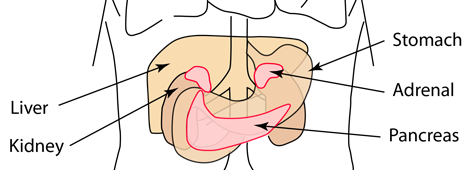 | The digestive system of humans involves the stomach, the pancreas and gall bladder, the small intestine and the liver. 人类的消化系统包括胃、胰腺和胆囊、小肠以及肝脏。 |
The stomach performs a chemical breakdown of foods using enzymes and hydrochloric acid. After the stomach, the partially digested food passes through a constricted passage called the pyloric sphincter. The digestive process also depends upon the endocrine system with hormones produced by the pancreas and passed through the gall bladder. The digestive process also depends upon the liver, which handles the distribution of the nutrients in the blood supply from the digestive system.
| Stomach Wiki
胃维基 |
| This material is part of a brief overview of the topics studied in biology with the intent to highlight the connections to basic ideas in physics and physical science.
这部分内容是对生物学中研究主题的简要概述,旨在突出其与物理学和物理科学基本概念的联系。 |
胃利用酶和盐酸对食物进行化学分解。食物在胃中被部分分解后,会通过一个称为幽门括约肌的狭窄通道进入小肠。消化过程也依赖于内分泌系统,胰腺产生的激素通过胆囊传递。消化过程也依赖于肝脏,它负责将消化系统中的营养物质分配到血液中。
Reference
Audesirk & Audesirk
Ch 32
Thibodeau & Patton
Ch 16
索引 参考 Audesirk & Audesirk 第32章 Thibodeau & Patton 第16章
| HyperPhysics***** Biology
HyperPhysics ***** 生物学 | R Nave |
返回