Forms of Quartz
Quartz is silicon dioxide, SiO2. Quartz is abundant in the Earth's crust, being the chemically simplest form of the silicates. All the samples here are displayed in the Smithsonian Museum of Natural History.
|
This sample of quartz at right is from Minas Gerais, Brazil. The sample is about 50 cm high.
右侧的这块石英样品来自巴西的米纳斯吉拉斯州,高度约为50厘米。
石英是二氧化硅,SiO₂。石英在地壳中很丰富,是硅酸盐中化学最简单的形式。所有这些样本都陈列在史密森尼自然历史博物馆中。 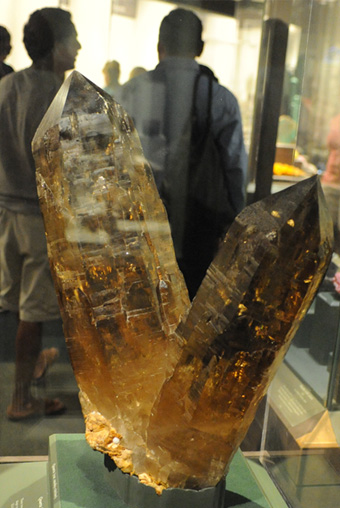 The size of this quartz sample can be appreciated in comparison with the person walking by on the other side of it. It is described as smoky quartz and the sample is about 50 cm high. Its origin is Minas Gerais, Brazil and its mass is listed as 32.6 kg. 这块石英样品的大小可以通过与它另一边走过的那个人进行比较来大致理解。它被描述为烟煤石英,高度约为50厘米。其产地是巴西的米纳斯吉拉斯州,其质量列为32.6千克。 | 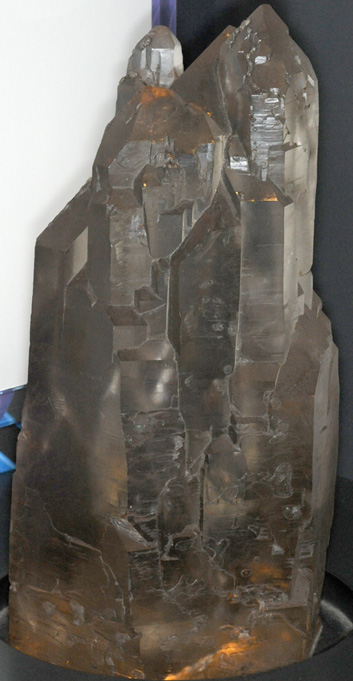 |
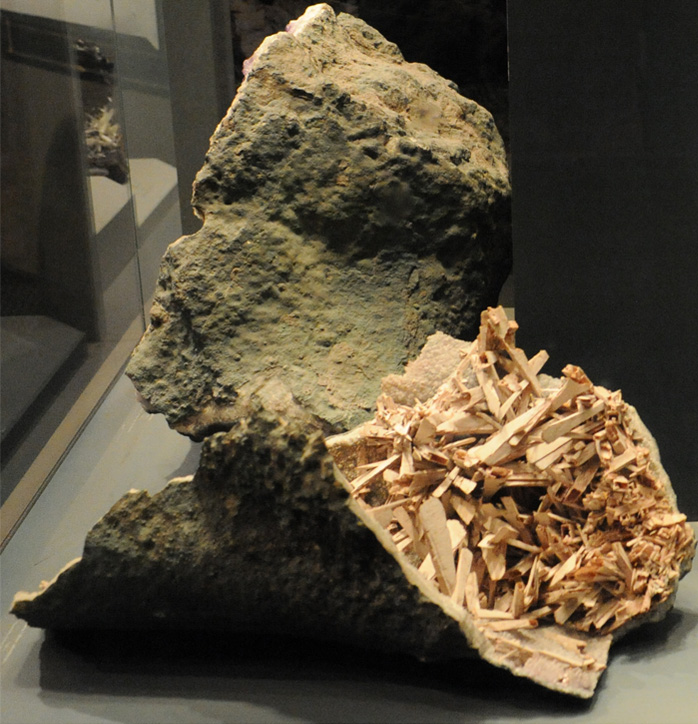
It is hard to believe that the image above is quartz, since we envision quartz as a clear crystal. This sample is displayed in the Smithsonian Museum of Natural History. The object is 40-50cm across. It is described as quartz after anhydrite.
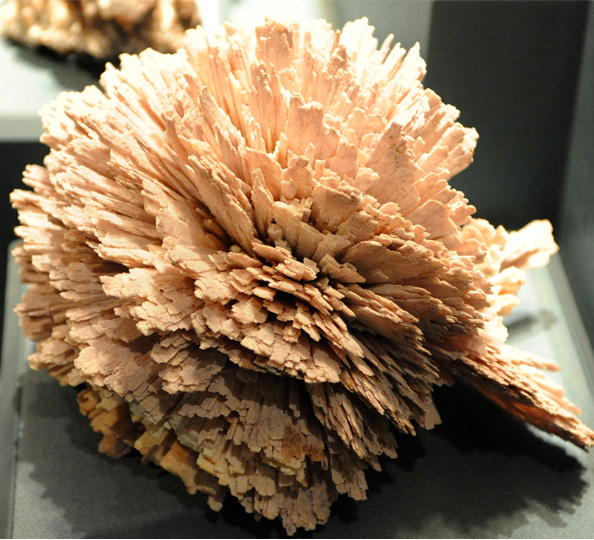 | This sample is also quartz after anhydrite. "Quartz after anhydrite" means that it initially formed as anhydrite crystals and then was chemically replaced by quartz while retaining the crystal shape of the anhydrite precursor. 这种样本也是方解石之后的石英。‘方解石之后的石英’是指它最初形成于方解石晶体,之后被石英取代,但保留了方解石前体的晶体形状。 This sample is about 20cm across and is from Irai, Rio Grande do Sul, Brazil. 这个样本宽约20厘米,来自巴西圣保罗州伊拉伊。 |
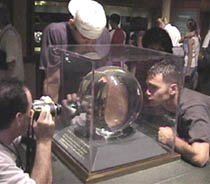
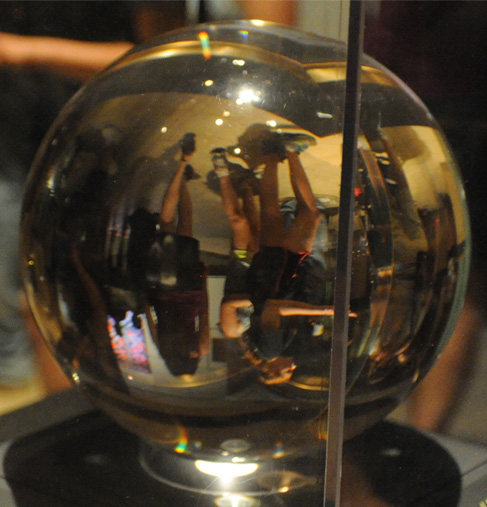 | This quartz sphere appears to be 50-60 cm in diameter and is labeled as weighing 242,323 carats. It was cut and polished in China in 1923-24. Its origin is speculated to be Burma, but no one knows. 这个石英球的直径似乎在50至60厘米之间,并被标记为重242,323克拉。它于1923-1924年在中国被切割和抛光。其来源被推测为缅甸,但无人知晓。
 |
|
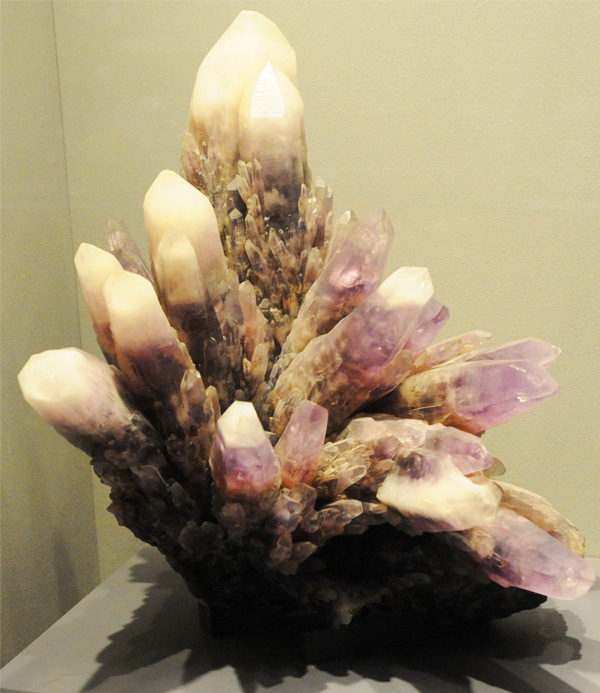
This huge display of amethyst crystals is about 60x60 cm and is from Guerrero, Mexico. 这块巨大的紫水晶晶体展示区约为60厘米见方,来自墨西哥格鲁埃罗州。 |
 |
| More quartz varieties
更多石英种类 |
| Minerals
矿物 |
| HyperPhysics***** Geophysics
HyperPhysics ***** 地球物理学 | R Nave |