Cholesterol
Cholesterol is an example of the class of compounds called lipids, and its structure causes it to be classified as a steroid. 胆固醇是脂类化合物的一个例子,其结构使其被归类为甾体化合物。 | 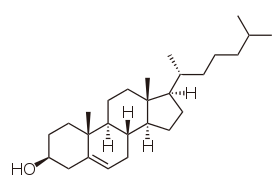 |
Cholesterol is a vital component of the membranes of eukaryotic cells and is used by cells to synthesize other steroids. Though essential in cell membranes and in the blood, high cholesterol levels are associated with heart disease because of the propensity of cholesterol to form plaques which obstruct blood vessels.
High blood levels of cholesterol bound to a carrier molecule called a low-density lipoprotein (LDL) are associated with the formation of the plaques in arteries. Cholesterol bound to high-density lipoproteins (HDL) tends to be metabolized or excreted and is often referred to as "good cholesterol" in health discussions.
Biochemical concepts
Chemistry concepts
Reference
Audesirk & Audesirk
| HyperPhysics*****Chemistry
HyperPhysics ***** 化学 | R Nave |