Stabilization of Voltage Gain
电压增益的稳定
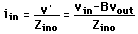
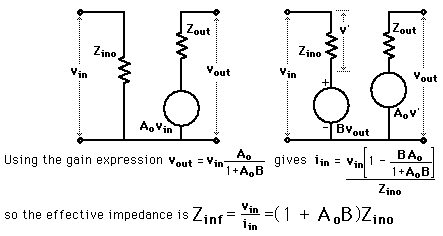
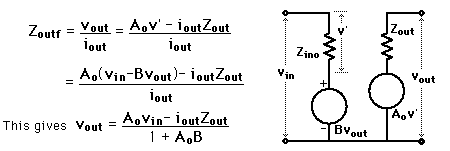
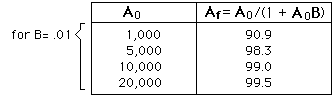
One of the benefits of negative feedback is the stabilization of the voltage gain of an amplifier against changes in the components (e.g., with temperature, frequency, etc. ). If you represent the gain without feedback (the open loop gain) by A0 , then the system gain with negative feedback is
负反馈的一个好处是使放大器的电压增益对元件变化(例如温度、频率等)具有稳定性。如果用没有反馈的增益(开环增益)表示为 A₀ ,则带有负反馈的系统增益为
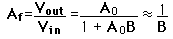
where B is the fraction of the output which feeds back as a negative voltage at the input. The extent of this stabilizing influence can be illustrated as follows:
其中,B 表示输出中反馈到输入端作为负电压的比例。这种稳定作用的程度可以如下方式来说明:
 | This stabilization increases the effective bandwidth.
这种稳定措施增加了有效带宽。 |
| Why use negative feedback?
为何使用负反馈? |
Electronics concepts
Op-amp concepts
Feedback concepts
索引 电子概念 运算放大器概念 反馈概念
| HyperPhysics*****Electricity and magnetism
HyperPhysics ***** 电磁学 | R Nave |
返回