 |
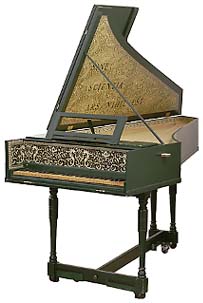
The Harpsichord八音盒
A stringed keyboard instrument developed during the 14th and 15th century, the harpsichord was widely used until the early 19th century when it was superseded by the piano. 20th century revivals of the instrument feature music of the 16th to 18th centuries with particular emphasis on Bach's music. 14至15世纪发展起来的弦键乐器,哈普西琴在19世纪初被钢琴取代之前被广泛使用。20世纪对这种乐器的复兴主要演奏16至18世纪的音乐,尤其是巴赫的作品。
The metal strings are sounded by plucking with a small piece of material called a plectrum which is attached to the key mechanism. A downward stroke on the key raises the plectrum on the other end so that it plucks the string and then pivots so that it does not touch the string on the way down. 金属弦是通过用一块称为拨片的小片材料拨动而发声的,该拨片固定在琴键机制上。当按下琴键时,拨片被抬起,从而拨动弦,然后绕轴转动,以免在下落时再次触碰弦。
|
Console instruments
Musical instruments
索引 控制台仪器 音乐乐器
| HyperPhysics***** Sound
HyperPhysics ***** 声音 | R Nave |
返回