The Trombone管乐
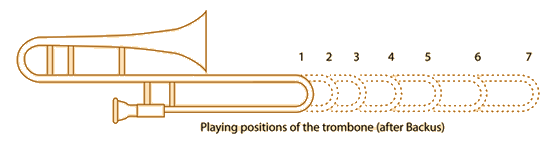
![]() The trombone emerged as a variation of the medieval trumpet when the slide, in the form of a U-bend, was created (mid-15th century), immediately producing an efficient and unique low brass instrument capable of playing all chromatics. From that time to the present, the instrument has consisted fundamentally of a bell section including attached inner slides, outer slides, and mouthpiece, the tube being cylindrical up to a gradual expansion toward the bell. 当U形滑管被创造出来(15世纪中叶)时,长号作为中世纪号角的一种变体应运而生,立即成为一种高效且独特的低音铜管乐器,能够演奏所有音阶。从那时起,该乐器基本由包括附带的内滑管、外滑管和嘴子的bell部分组成,管体在逐渐扩张至bell部分之前保持圆柱形。
|
Index Brass concepts Brass instruments Musical instruments 索引 铝合金概念 铝合金乐器 音乐乐器 | ||
|
Go Back
返回 |
Trombone Details管风琴细节
The trombone has a length of 270 cm. A common design pitch is B-flat. If the tube is made wider with respect to its length, then the pedal tones sound more easily but the upper resonances are more difficult to play. A common construction material for trombones is yellow brass (70% copper, 30% zinc), but there are other variations. Slides may be made out of several materials: nickel for light, fast slides to heavier brass and nickel combinations. 小号管的长度为270厘米。一种常见的音调是B调。如果管体相对于其长度更宽,那么低音更容易发出,但高音共振则更难演奏。小号的常见制作材料是黄铜(70%铜,30%锌),但也有其他变种。滑动部分可能由多种材料制成:轻型滑动部分使用镍,较重的滑动部分则使用黄铜和镍的组合。
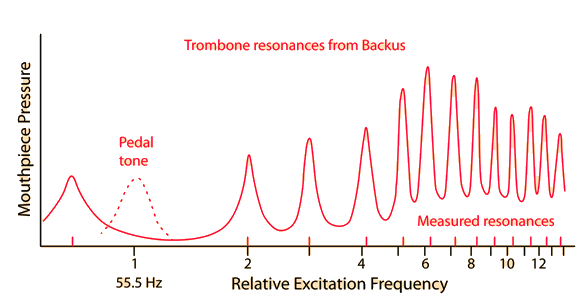
![]() As with other brass instruments, an approximate harmonic series is made with the aid of the bell effect and the mouthpiece effect. For the trombone, the lowest resonance is significantly lower than the numerical fundamental frequency of the harmonic series. That numerical fundamental or "pedal tone" is produced by the combination of the upper resonances, and is a very strong and useful note. ![]()
如同其他铜管乐器一样,借助铃效应和嘴管效应,可以形成近似的共振系列。对于小号而言,最低的共振频率显著低于共振系列的数值基频。该数值基频或‘踏板音’是由上部共振产生的,是一个非常强且有用的音符。 |
Index Brass concepts Brass instruments Musical instruments Reference Backus Ch 12 索引 铝合金概念 铝合金乐器 音乐乐器 参考 Backus 第12章 | ||
|
Go Back
返回 |