The Mouthpiece Effect
口部效应
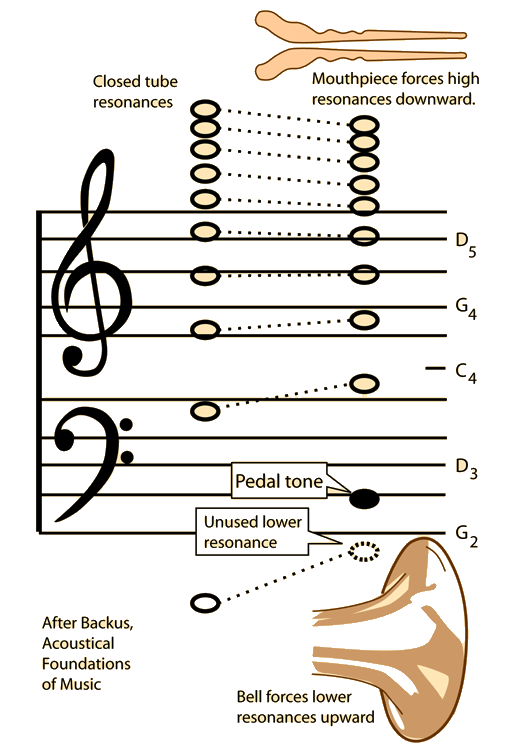
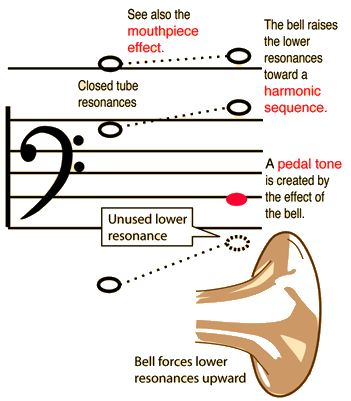
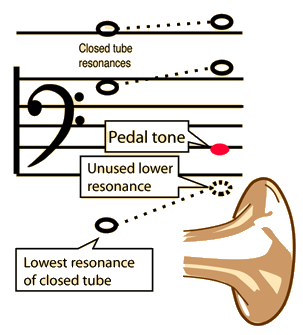
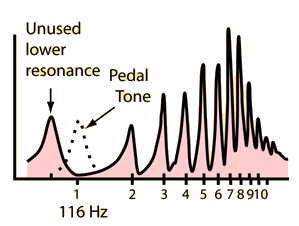
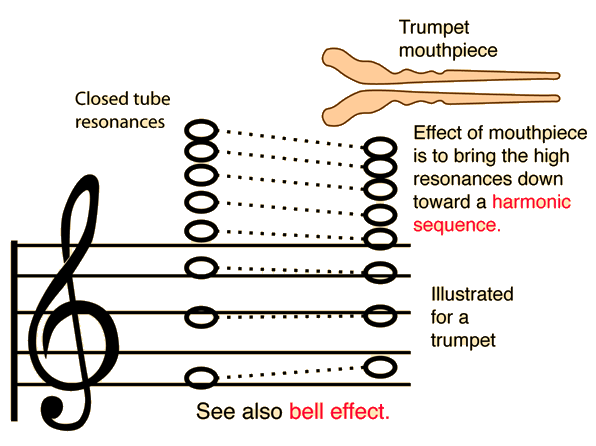
The mouthpiece of a brass instument contributes to bringing the resonances into a harmonic sequence by bringing the high resonances down with respect to the resonances of a closed tube. The mouthpiece acts like a cavity resonator, and as
the played frequency
approaches this resonant
frequency, the effective
length of the tube becomes
greater (approaching the
tube length which would
give that same resonant
frequency. This increases
the effective length for
high frequencies lowering
the high resonant
frequencies.
铜制乐器的喇叭口有助于将共振引入谐波序列,因为它能将高频共振降低到封闭管的共振频率之下。喇叭口起着腔体共振器的作用,当演奏频率接近这个共振频率时,管的有效长度会增加(接近能够产生相同共振频率的管长)。这会增加高频的共振长度,从而降低高频共振频率。
This is an active graphic. You may click on the bold text for further details.
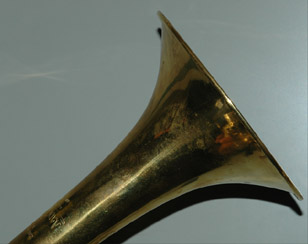
This trumpet mouthpiece is very solidly constructed. It forms a comfortable cup for the vibration of the players lips.
这个喇叭嘴垫构造非常牢固。它为演奏者嘴唇的振动形成一个舒适的凹槽。 Good discussions of mouthpiece construction and function may be found in Shilke and Wolfe. The following are some of the ideas covered.
关于嘴子构造和功能的详细讨论,可参见Shilke和Wolfe。以下是一些涉及的内容。 | 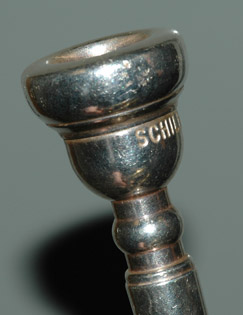 |
The mouthpiece can be divided into three parts:
- The rim of the mouthpiece affects flexibility and attack. The wider the rim, the more comfortable it feels to the player, but flexibility is reduced. With narrower rims, enhanced flexibility comes at the expense of tiring the player more quickly.
口哨的边缘会影响灵活性和演奏力度。边缘越宽,玩家感觉越舒适,但灵活性会降低。使用较窄的边缘虽然能提高灵活性,但会使玩家更容易疲劳。 - The cup of the mouthpiece affects tone and attack. A deep cup gives a darker tone and low notes are easier to play. A shallow cup produces a brighter tone and the upper notes are easier to play. A flatter shape improves the precision of attack. A steep shape like the French horn provides gentler attacks, but changes the timbre of the instrument.
杯形会影响音色和攻击性。深杯形会产生更暗的音色,低音更容易演奏。浅杯形会产生更明亮的音色,高音更容易演奏。扁平的杯形能提高攻击性的精度。陡峭的杯形,如法国号,会产生更柔和的攻击性,但会改变乐器的音色。 - The throat/backbore throat of the mouthpiece affects tone and air resistance. A larger diameter throat gives a mellower tone. Longer backbore (shorter throat) can make the higher register flat and shorter backbore (longer throat) can make it sharp.
口哨管的喉部(背孔)会影响音色和空气阻力。喉部直径越大,音色越柔和。较长的背孔(较短的喉部)会使高音区变平,而较短的背孔(较长的喉部)则会使高音区变尖。
嘴孔可以分为三个部分:
这是一个动态图形。您可以点击加粗的文字以获取更多详情。 |
Index
Brass concepts
Brass instruments
Musical instruments
Reference
Backus
pp. 263-4
Shilke
Wolfe
索引 铝合金概念 铝合金乐器 音乐乐器 参考 Backus 页263-4 Shilke Wolfe |