Electrolytic Cells
电解池
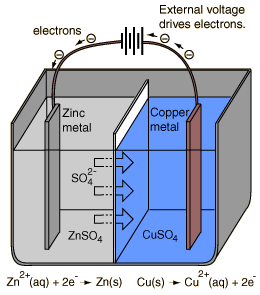
An electrolytic cell is an electrochemical cell in which the energy from an applied voltage is used to drive an otherwise nonspontaneous reaction. Such a cell could be produced by applying a reverse voltage to a voltaic cell like the Daniell cell.
电解池是一种电化学电池,其能量来源于外加电压,用于驱动一个原本非自发的反应。这种电池可以通过将电压施加到像丹尼尔电池这样的伏打电池上产生。
 |
 |
If a voltage greater than 1.10 volts is applied as illustrated to a cell under standard conditions, then the reaction
如果将大于1.10伏的电压施加到电池(如图所示)并在标准条件下,那么反应
Cu(s) + Zn2+(aq) -> Zn(s) + Cu2+(aq)
Cu(s) + Zn²+(aq) → Zn(s) + Cu²+(aq)
will be driven by removing Cu from the copper electrode and plating zinc on the zinc electrode.
将通过从铜电极上移除Cu并在其上镀上锌来实现。
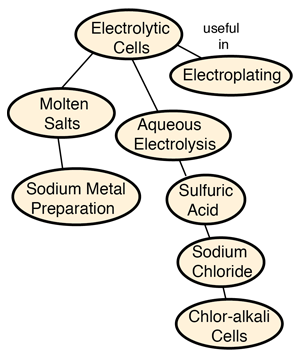
Electrolytic processes are very important for the preparation of pure substances like aluminum and chlorine.
电解过程对于制备纯物质如铝和氯气非常重要。
Electrochemistry concepts
索引 电化学概念
| HyperPhysics*****Chemical concepts
HyperPhysics ***** 化学概念 | R Nave |
返回