The Hubble Space Telescope "Extreme Deep Field" View
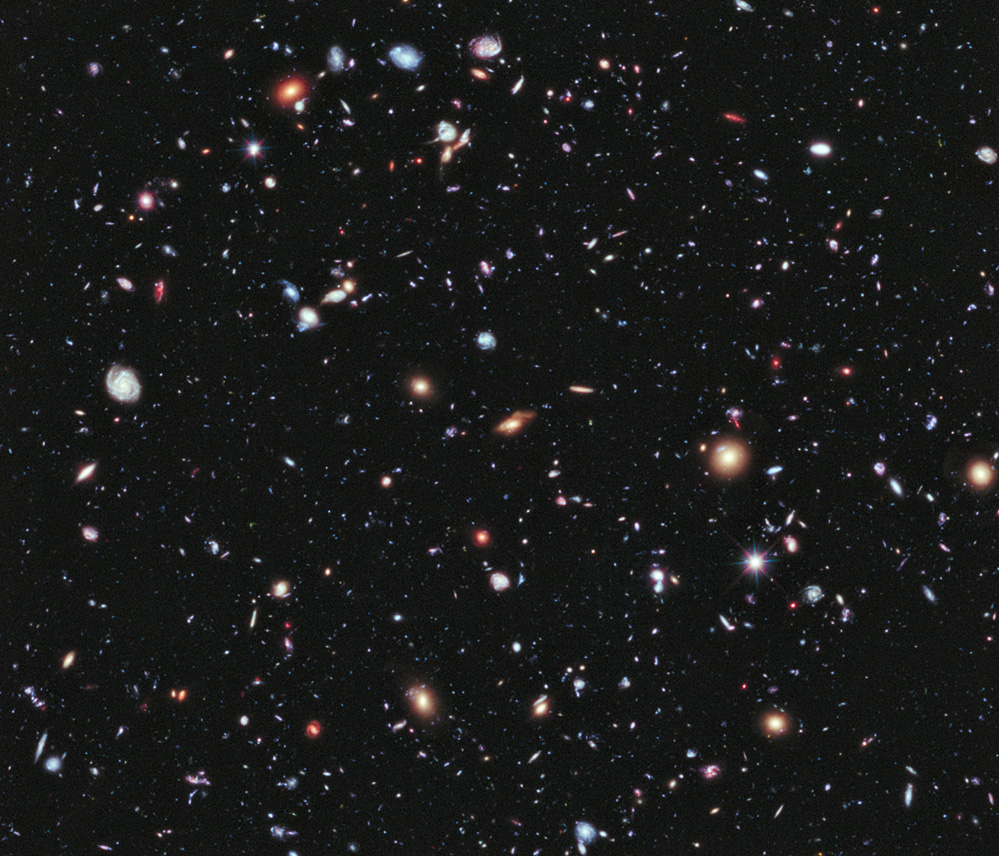
Photo Credit: NASA; ESA; G. Illingworth, D. Magee, and P. Oesch, University of California, Santa Cruz; R. Bouwens, Leiden University; and the HUDF09 Team.
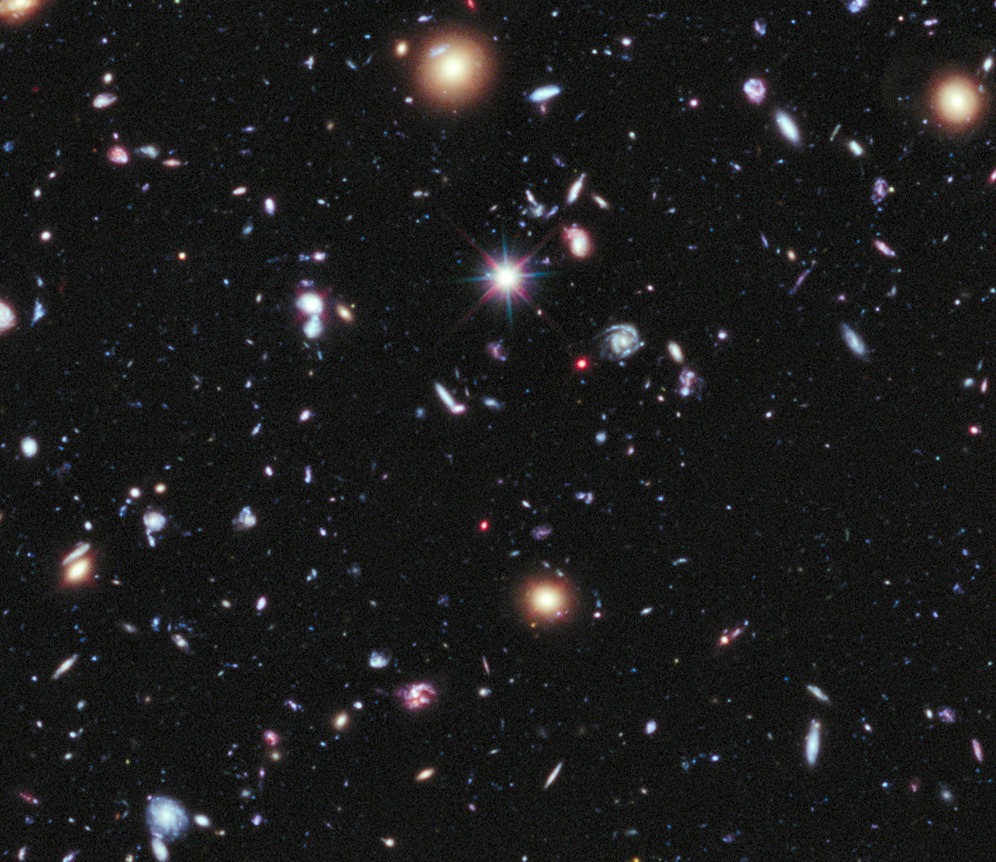
From NASA, with the following description: "Called the eXtreme Deep Field, or XDF, the photo was assembled by combining 10 years of NASA Hubble Space Telescope photographs taken of a patch of sky at the center of the original Hubble Ultra Deep Field.
The Hubble Ultra Deep Field is an image of a small area of space in the constellation Fornax, created using Hubble Space Telescope data from 2003 and 2004. By collecting faint light over many hours of observation, it revealed thousands of galaxies, both nearby and very distant, making it the deepest image of the universe ever taken at that time.
The new full-color XDF image is even more sensitive, and contains about 5,500 galaxies even within its smaller field of view. The faintest galaxies are one ten-billionth the brightness of what the human eye can see."
Below are four segments of this total image to show higher resolution, arranged clockwise in quadrants starting with the upper left.
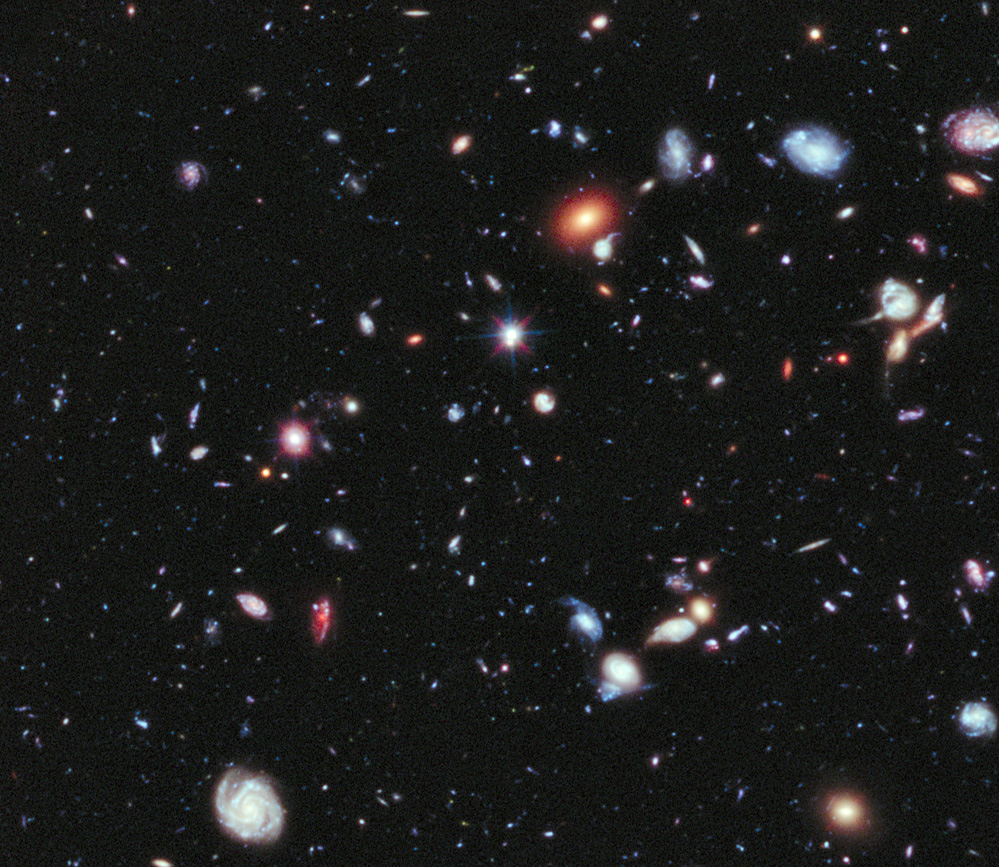
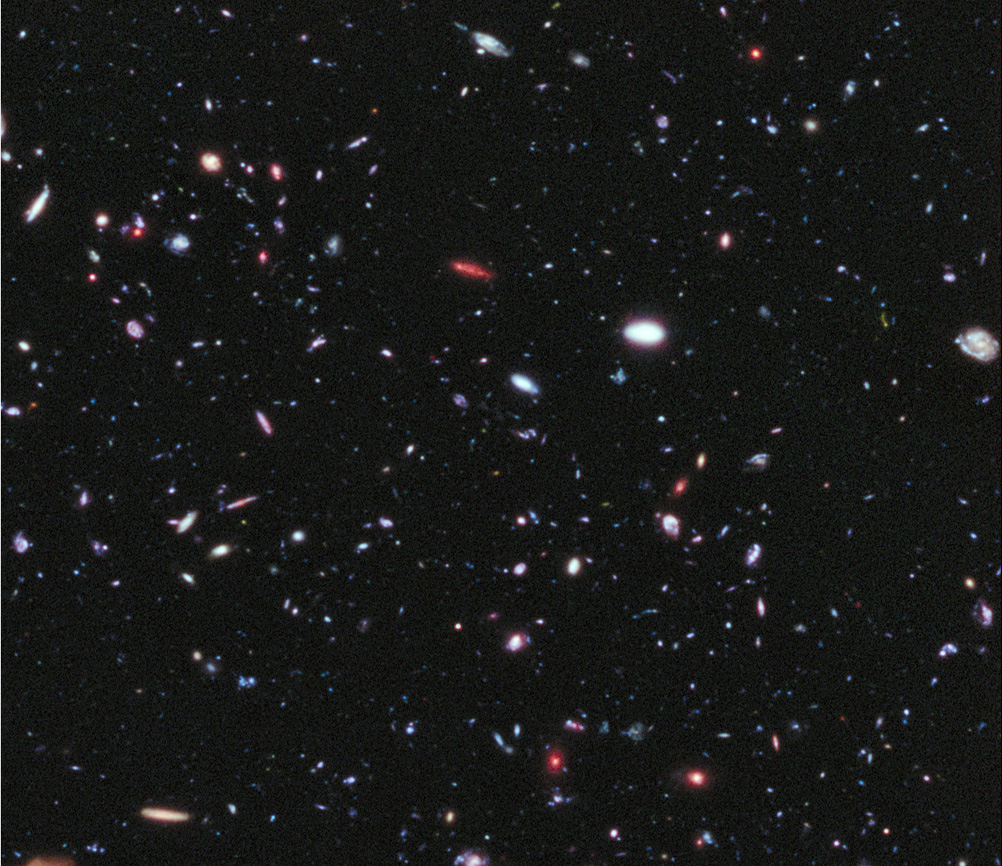
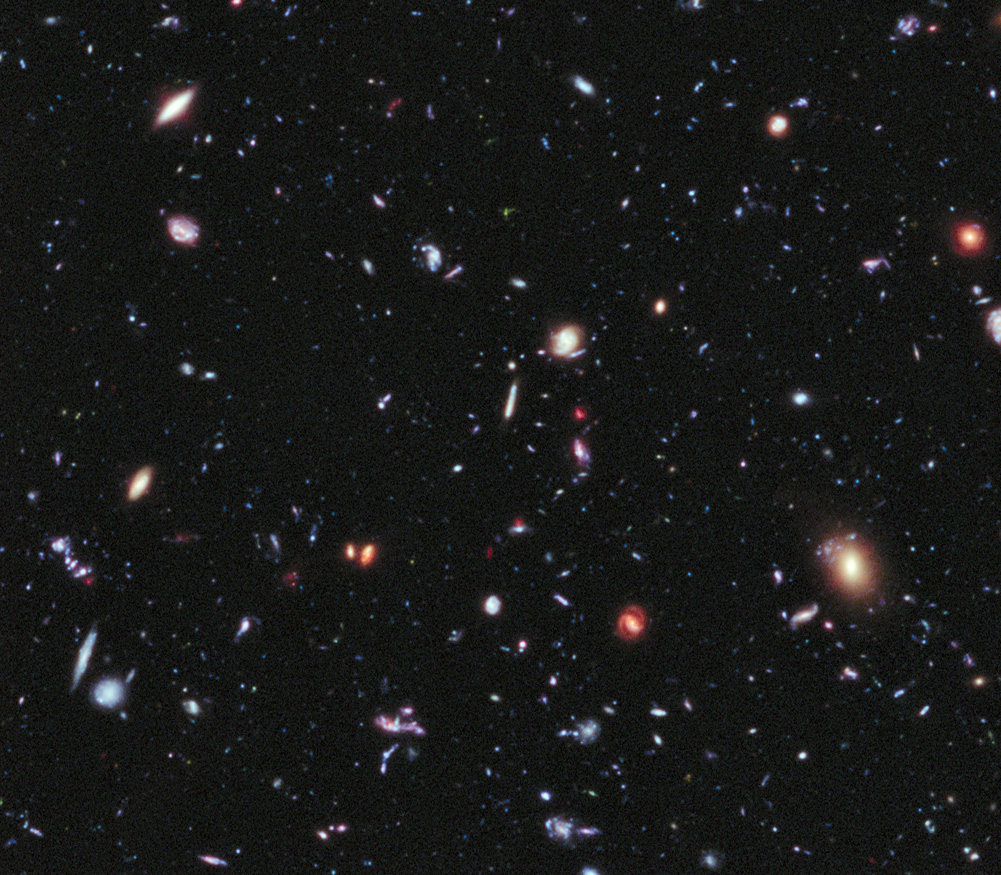
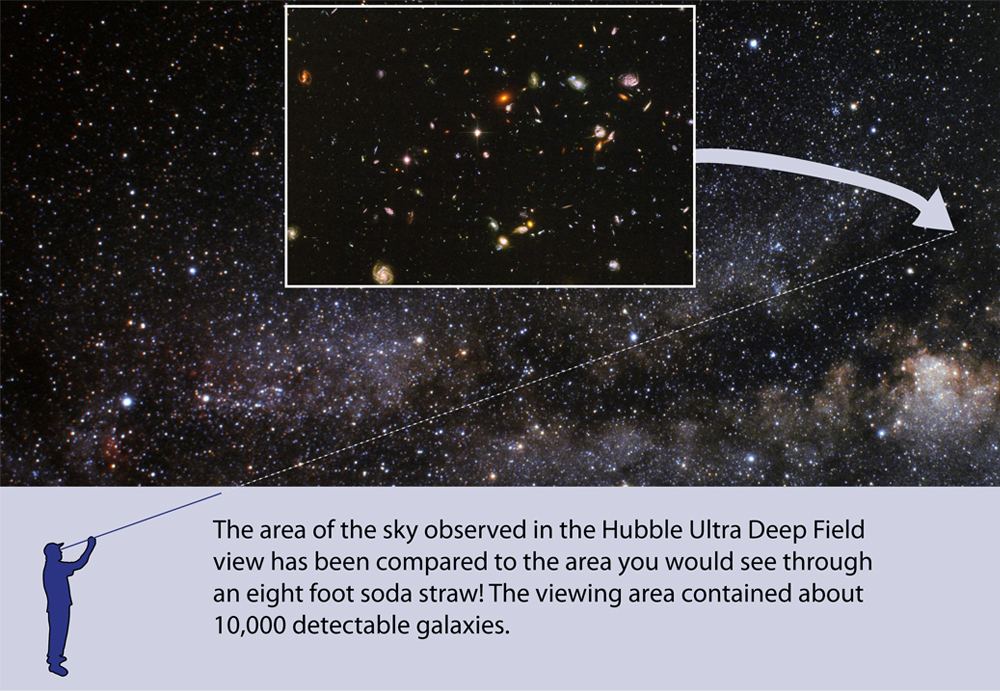
| The illustration above depicts the angular size of the earlier Hubble Ultra Deep Field as that which you would get through an 8-foot long soda straw. The XDF spans about 2 arc minutes compared to about half a minute of arc for the moon, so about 15 times smaller.
From NASA's description: "Magnificent spiral galaxies similar in shape to our Milky Way and the neighboring Andromeda galaxy appear in this image, as do the large, fuzzy red galaxies where the formation of new stars has ceased. These red galaxies are the remnants of dramatic collisions between galaxies and are in their declining years. Peppered across the field are tiny, faint, more distant galaxies that were like the seedlings from which today's magnificent galaxies grew. The history of galaxies -- from soon after the first galaxies were born to the great galaxies of today, like our Milky Way -- is laid out in this one remarkable image.
Hubble pointed at a tiny patch of southern sky in repeat visits (made over the past decade) for a total of 50 days, with a total exposure time of 2 million seconds. More than 2,000 images of the same field were taken with Hubble's two premier cameras: the Advanced Camera for Surveys and the Wide Field Camera 3, which extends Hubble's vision into near-infrared light." 霍布斯向南天的一小块天空进行了多次观测(持续十年),总计50天,总曝光时间达200万秒。使用霍布斯的两台主要相机——先进巡天相机和宽场相机3,拍摄了超过2000张同一区域的图像,后者将霍布斯的视野扩展到了近红外线波段。 "The universe is 13.7 billion years old, and the XDF reveals galaxies that span back 13.2 billion years in time. Most of the galaxies in the XDF are seen when they were young, small, and growing, often violently as they collided and merged together. The early universe was a time of dramatic birth for galaxies containing brilliant blue stars extraordinarily brighter than our sun. The light from those past events is just arriving at Earth now, and so the XDF is a "time tunnel into the distant past." The youngest galaxy found in the XDF existed just 450 million years after the universe's birth in the big bang." 宇宙的年龄是13.7十亿年,而XDF揭示了在时间上回溯至13.2十亿年的星系。XDF中大多数星系在它们年轻、小型且成长的时期被观测到,常常在碰撞和合并时剧烈地发展。早期的宇宙是一个星系诞生剧烈的时期,其中包含着比我们的太阳明亮得多的蓝色星系。这些过去事件的光现在刚刚到达地球,因此XDF是一扇通向遥远过去的时光隧道。在XDF中发现的最年轻的星系,存在于宇宙大爆炸后仅仅4.5亿年的时候。
上图展示了早期哈勃深场的角大小,就像通过一根8英尺长的苏打管所看到的那样。XDF的角尺寸约为2角分,相比之下,月亮的角尺寸约为半角分,因此大约小15倍。根据NASA的描述:"这张图像中出现了与我们的银河系和邻近的仙女座星系形状相似的壮丽螺旋星系,还有那些大而模糊的红色星系,这些星系中新生星的形成已经停止。这些红色星系是星系之间剧烈碰撞的遗迹,正处于衰退期。在这一区域内,散布着许多微小、暗淡、更遥远的星系,它们就像今天壮丽星系的幼苗。这张图像展示了星系的历史——从第一颗星系诞生后不久到今天的巨大星系,如我们的银河系——都被展现出来。 | 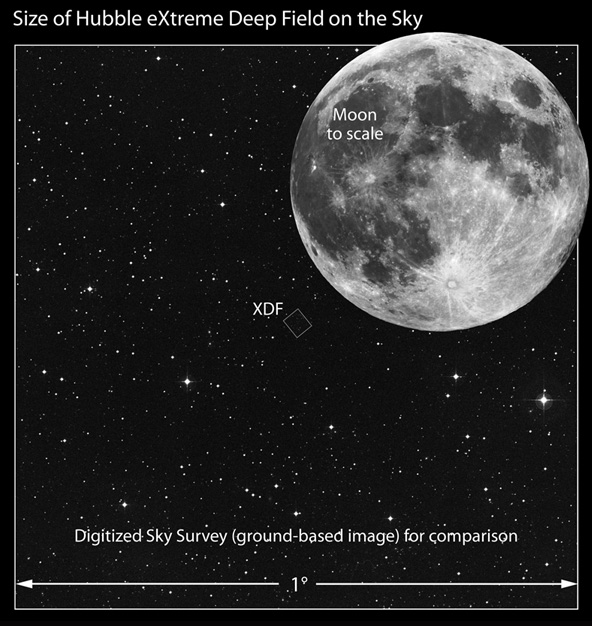 |
NASA on the Extreme Deep Field
| Classification of galaxies
星系分类 | Star Index
星索引 |
| Another Hubble deep space view
另一幅哈勃空间视图 |
Galaxy concepts
| HyperPhysics***** Astrophysics
HyperPhysics ***** 天体物理学 | R Nave |