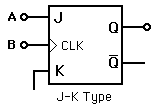
Asynchronous Inputs to Flip-Flops
触发器的异步输入
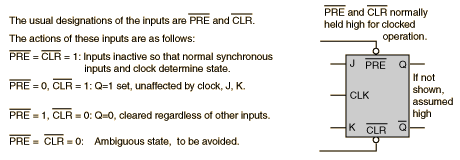
The ordinary data transfer uses of flip-flops make use of inputs which are called "control" or "synchronous" inputs. Most often, the output changes from the flip-flops occur when data is applied to these inputs synchronously with a clock pulse. There is another set of inputs called the asynchronous set and clear inputs which will change the state of the flip-flop regardless of what is going on at the other inputs - they are override inputs which can force a given state onto the flip-flop. They are used in asynchronous data transfer.
普通的数据传输使用触发器时,会利用被称为'控制'或'同步'输入的输入端。通常,当数据被同步地施加到这些输入端时,触发器的输出会发生变化。另外还有一组称为'异步置位'和'清零'的输入,它们可以不管其他输入端的状态而改变触发器的状态,这些是覆盖输入,可以强制将特定状态施加到触发器上。它们用于异步数据传输。
| Flip-Flops
翻转器 |
Electronics concepts
Digital circuits
Data Transfer
J-K Flip-Flop Applications
Reference
Tocci
Digital Systems, Sec 5-9
索引 电子学概念 数字电路 数据传输 J-K 触发器 应用 参考 Tocci 数字系统,第5-9节
| HyperPhysics*****Electricity and magnetism
HyperPhysics ***** 电磁学 | R Nave |
返回