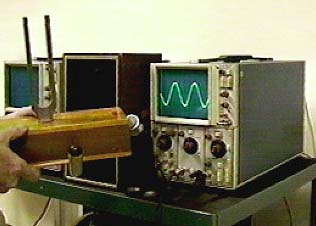
Tuning Fork Modes
调谐叉模式
|
The tuning fork has a very stable pitch and has been used as a pitch standard since the Baroque period.
调谐叉具有非常稳定的音调,自巴洛克时期以来一直被用作音调标准。 |
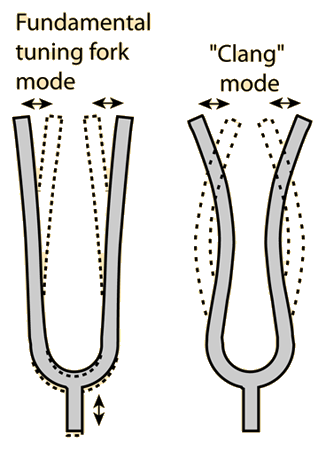 |
The "clang" mode has a frequency which depends upon the details of construction, but is usuallly somewhat above 6 times the frequency of the fundamental. This is close to the first overtone of the clamped bar. The clang tone dies away rapidly. ‘clang’模式的频率取决于结构细节,但通常略高于基频的6倍。这接近于夹紧条的第一泛音。‘clang’音迅速衰减。 |
The two sides or "tines" of the tuning fork vibrate at the same frequency but move in opposite directions at any given time. The two sound waves generated will show the phenomenon of sound interference.
调谐叉的两个边或“叉柄”在任何时刻以相同频率振动,但方向相反。由这两个声源产生的声波将表现出声干涉现象。
| Illustration with oscilloscope
示意图与示波器 |
Percussion instruments
Musical instruments
索引 打击乐器 音乐乐器
| HyperPhysics***** Sound
HyperPhysics ***** 声音 | R Nave |
返回