Bilingual edition: English is preserved and Chinese follows each unit. Terminology uses the confirmed v20260916 glossary; automated semantic review remains traceable.
中英双语版:英文原文完整保留,中文紧随对应单元;术语采用 v20260916 确认表,自动语义审校结果可追溯。

Airplane in Wind

风中飞机

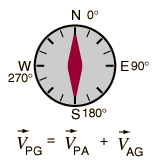
The cross-country navigation of an aircraft involves the vector addition of relative velocities since the resultant ground speed is the vector sum of the airspeed and the wind velocity. Using the air as the intermediate reference frame, ground speed can be expressed as:

飞机的跨洲航行涉及相对速度的矢量相加,因为地面速度是空速与风速矢量和的结果。使用空气作为中间参考系,地面速度可以表示为:
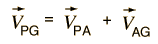
The velocity of the plane with respect to the ground is equal to the velocity of the plane with respect to the air plus the velocity of the air with respect to the ground.

飞机相对于地面的速度等于飞机相对于空气的速度加上空气相对于地面的速度。

Calculation

计算
Index

Relative velocity
索引 相对速度
 
HyperPhysics***** Mechanics
力学
R Nave
Go Back
返回


Airplane in Wind: Calculation of Ground Velocity

有风时飞机的地面速度计算

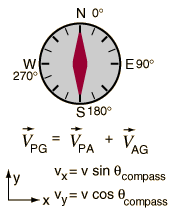
Navigation directions are usually expressed in terms of compass angles as illustrated.

导航方向通常以罗盘角度表示,如图所示。

This calculation is a straighforward vector addition of the airplane's airspeed and the wind velocity.

这个计算是将飞机的空速与风速进行矢量相加。
Velocity unit
For airspeed
对于空速
= at °
= 在 °
中文译文中的待填/计算数值依次对应:1:a 2:u2 3:aa。实际数值以上方原输入框为准。
and wind speed
和风速
= at °
= 在 °
中文译文中的待填/计算数值依次对应:1:b 2:u3 3:ab。实际数值以上方原输入框为准。
the resultant ground velocity is
resultant ground velocity is
= at °
= 在 °
中文译文中的待填/计算数值依次对应:1:c 2:u4 3:ac。实际数值以上方原输入框为准。

Note: The wind direction in this calculation is the direction of air motion, not the direction from which the wind is coming. So if you call a wind from the north a "north wind", then the air motion direction is south and you would enter 180° for the wind angle.

注意:本计算中的风向是指空气的运动方向,而不是风的来源方向。所以如果你把从北边吹来的风称为“北风”,那么空气的运动方向是南,你应该将风向角输入为180°。

Details about calculation

计算详情
Alternate calculations:
其他计算方法:
Wind velocity
风速
Desired heading and resultant
期望的标题和结果
速度单位
中文译文中的待填/计算数值依次对应:1:u1。实际数值以上方原输入框为准。
Index

Relative velocity
索引 相对速度
 
HyperPhysics***** Mechanics
力学
R Nave
Go Back
返回


Discussion of Airplane in Wind

风中的飞机讨论

Navigation directions are usually expressed in terms of compass angles as illustrated. The vector addition necessary to calculate resultant velocity is carried out by calculating the components of each vector.
导航方向通常用罗盘角度来表示,如图所示。计算 resultant velocity 所需的矢量加法,是通过计算每个矢量的分量来实现的。
There are some practical problems associated with this calculation: you can either convert compass angles to standard angles, or do the calculation in compass angles with the relationships shown. If you calculate the standard angle for the final bearing, it can then be converted to compass angle. A final problem is the arctan problem with calculators and computer languages: you have to check the quadrant to be sure you get the correct angle.

Calculation

计算
这种计算有一些实际问题:你可以将罗盘角度转换为标准角度,或者在罗盘角度下进行计算,使用所示的关系。如果你计算最终方位的标准角度,它可以转换为罗盘角度。另一个问题是计算器和计算机语言中的反正切问题:你必须检查象限,以确保得到正确的角度。
Index

Relative velocity
索引 相对速度
 
HyperPhysics***** Mechanics
力学
R Nave
Go Back
返回