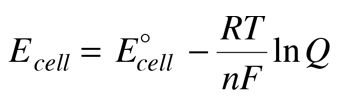
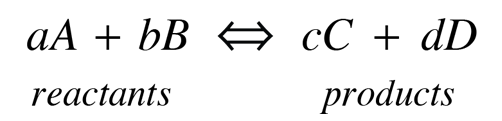
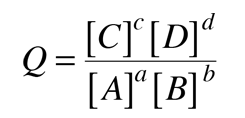
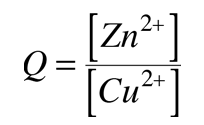
Standard Electrode Potentials
标准电极电势
In an electrochemical cell, an electric potential is created between two dissimilar metals. This potential is a measure of the energy per unit charge which is available from the oxidation/reduction reactions to drive the reaction. It is customary to visualize the cell reaction in terms of two half-reactions, an oxidation half-reaction and a reduction half-reaction.
在电解池中,两种不同金属之间会产生一个电势。这个电势是衡量氧化还原反应中每单位电荷可提供的能量,用于驱动反应。通常,人们会将电池反应视为两个半反应,即氧化半反应和还原半反应。
| Reduced species -> oxidized species + ne-
简化物种 -> 氧化物种 + ne⁻ | |
| Oxidized species + ne- -> reduced species
氧化剂 + ne - -> 还原剂 | |
The cell potential (often called the electromotive force or emf) has a contribution from the anode which is a measure of its ability to lose electrons - it will be called its "oxidation potential". The cathode has a contribution based on its ability to gain electeons, its "reduction potential". The cell potential can then be written
电池的电动势(通常称为电动势或emf)包含来自阳极的贡献,这是它失去电子能力的度量——它被称为其‘氧化势’。阴极的贡献基于其获得电子的能力,称为其‘还原势’。电池的电动势可以写成
Ecell = oxidation potential + reduction potential
电池的电动势等于氧化势与还原势之和
If we could tabulate the oxidation and reduction potentials of all available electrodes, then we could predict the cell potentials of voltaic cells created from any pair of electrodes. Actually, tabulating one or the other is sufficient, since the oxidation potential of a half-reaction is the negative of the reduction potential for the reverse of that reaction. Two main hurdles must be overcome to establish such a tabulation
如果我们能列出所有可用电极的氧化和还原电势,那么就可以预测由任意两个电极组成的原电池的电池电势。实际上,列出其中一个即可,因为一个半反应的氧化电势是该反应逆反应的还原电势的负数。要建立这样的列表,必须克服两个主要障碍。
- The electrode potential cannot be determined in isolation, but in a reaction with some other electrode.
电极电势不能孤立确定,而是在与其他电极反应的情况下确定的。
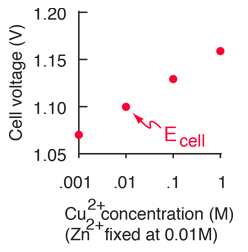
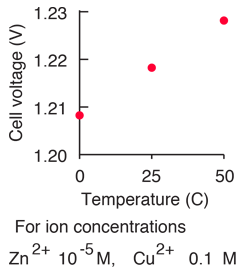
- The electrode potential depends upon the concentrations of the substances, the temperature, and the pressure in the case of a gas electrode.
电极电势取决于物质的浓度、温度以及气体电极中的压力。
In practice, the first of these hurdles is overcome by measuring the potentials with respect to a standard hydrogen electrode. It is the nature of electric potential that the zero of potential is arbitrary; it is the difference in potential which has practical consequence. Tabulating all electrode potentials with respect to the same standard electrode provides a practical working framework for a wide range of calculations and predictions. The standard hydrogen electrode is assigned a potential of zero volts.
实际上,克服这些障碍的第一步是通过相对于标准氢电极测量电势来实现的。电势的性质决定了零点是任意的;只有电势差才有实际意义。将所有电极电势相对于同一标准电极进行整理,为广泛的计算和预测提供了实用的框架。标准氢电极被赋予零伏的电势。
The second hurdle is overcome by choosing standard thermodynamic conditions for the measurement of the potentials. The standard electrode potentials are customarily determined at solute concentrations of 1 Molar, gas pressures of 1 atmosphere, and a standard temperature which is usually 25°C. The standard cell potential is denoted by a degree sign as a superscript.
第二个障碍是通过选择标准热力学条件来测量电势。标准电极电势通常在溶质浓度为1摩尔/升、气体压力为1大气压以及标准温度(通常为25°C)下确定。标准电池电势用上标度数符号表示。
| E°Cell
电池电动势 | - Measured against standard hydroden electrode.
相对于标准氢电极测量
- Concentration 1 Molar
浓度 1 mol/L
- Pressure 1 atmosphere
压力 1 个大气压
- Temperature 25°C
温度 25°C
|
The example below shows some of the extreme values for standard cell potentials.
下面的例子展示了一些标准电池电势的极值。
Cathode (Reduction)
Half-Reaction
阴极(还原)半反应 | Standard Potential
E° (volts)
标准电势 E ° (伏特) |
| Li+(aq) + e- -> Li(s)
Li⁺(aq) + e⁻ → Li(s) | -3.04 |
| K+(aq) + e- -> K(s)
K⁺(aq) + e⁻ → K(s) | -2.92 |
| Ca2+(aq) + 2e- -> Ca(s)
Ca²⁺(aq) + 2e⁻ → Ca(s) | -2.76 |
| Na+(aq) + e- -> Na(s)
Na⁺(aq) + e⁻ → Na(s) | -2.71 |
| Zn2+(aq) + 2e- -> Zn(s)
Zn²⁺(aq) + 2e⁻ → Zn(s) | -0.76 |
| Cu2+(aq) + 2e- -> Cu(s)
Cu²⁺(aq) + 2e⁻ → Cu(s) | 0.34 |
| O3(g) + 2H+(aq) + 2e- -> O2(g) + H2O(l)
O₃(g)+ 2H⁺(aq)+ 2e⁻ → O₂(g)+ H₂O(l) | 2.07 |
| F2(g) + 2e- -> 2F-(aq)
F₂(g) + 2e⁻ → 2F⁻(aq) | 2.87 |
The values for the table entries are reduction potentials, so lithium at the top of the list has the most negative number, indicating that it is the strongest reducing agent. The strongest oxidizing agent is fluorine with the largest positive number for standard electrode potential. The link below takes you to a more extensive table.
表中的数值是还原电势,因此列表顶部的锂具有最负的数值,表明它是最强的还原剂。最强的氧化剂是氟,其标准电极电势具有最大的正数值。下方的链接可带你到更详细的表格。
Useful applications of the standard electrode potentials include the following.
标准电极电势的有用应用包括以下内容。
|