Power Factor功率因数
For a DC circuit the power is P=VI, and this relationship also holds for the instantaneous power in an AC circuit. However, the average power in an AC circuit expressed in terms of the rms voltage and current is 对于直流电路,功率为 P=VI,这一关系也适用于交流电路的瞬时功率。然而,交流电路中以有效值电压和电流表示的平均功率为
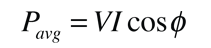
![]() where φ is the phase angle between the voltage and current. The additional term is called the power factor 其中φ是电压与电流之间的相位角。此外的项称为功率因数
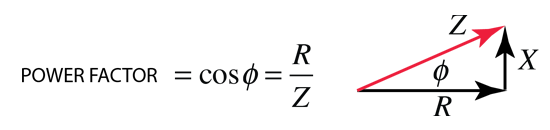
![]() From the phasor diagram for AC impedance, it can be seen that the power factor is R/Z. For a purely resistive AC circuit, R=Z and the power factor = 1. 从交流阻抗的相量图可以看出,功率因数是R/Z。对于纯电阻的交流电路,R=Z,功率因数为1。
|
Index AC Circuits 索引 AC 电路 | ||
|
Go Back
返回 |
Importance of Power Factor功率因素的重要性
A power factor of one or "unity power factor" is the goal of any electric utility company since if the power factor is less than one, they have to supply more current to the user for a given amount of power use. In so doing, they incur more line losses. They also must have larger capacity equipment in place than would be otherwise necessary. As a result, an industrial facility will be charged a penalty if its power factor is much different from 1. 电力公司希望实现功率因数为1或"单位功率因数",因为如果功率因数小于1,他们就必须为用户提供的相同功率使用量供应更多的电流。这样做会导致线路损耗增加。他们还必须配备比原本必要的更大容量的设备。因此,如果工业设施的功率因数与1相差很大,将会被收取罚款。
Industrial facilities tend to have a "lagging power factor", where the current lags the voltage (like an inductor). This is primarily the result of having a lot of electric induction motors - the windings of motors act as inductors as seen by the power supply. Capacitors have the opposite effect and can compensate for the inductive motor windings. Some industrial sites will have large banks of capacitors strictly for the purpose of correcting the power factor back toward one to save on utility company charges. 工业设施往往具有“滞后功率因数”,其中电流滞后于电压(类似于电感)。这主要是由于拥有大量电动机所致——电动机的绕组在电源看来相当于电感。电容器有相反的效果,可以补偿电动机绕组的电感性。一些工业场所会安装大量电容器, solely 为了将功率因数修正回1,以节省电费。
|
Index AC Circuits 索引 AC 电路 | ||
|
Go Back
返回 |