Niobium-Tin Superconductor铌-锡超导体
Niobium-tin is a Type II superconductor with a critical temperature of 18K and a critical magnetic field of 24.5 Tesla. These properties give it potential for constructing superconducting magnets, and it has been used for that purpose. It can withstand the highest current densities (up to 200,000 Amperes per square centimeter) at the highest working magnetic field (15 T). It has the mechanical disadvantage of being very brittle so that it cannot be drawn into wires for making magnet coils. To make magnet coils, separate strands of niobium wrapped in tin are made and then heated to fuse these materials into the niobium-tin alloy. Because of these mechanical difficulties, the makers of superconducting magnets have turned to niobium-titanium for the construction of magnet coils. 铌锡是一种II型超导体,其临界温度为18K,临界磁场为24.5特斯拉。这些特性使其有潜力用于制造超导磁体,并已用于此用途。它可以在最高工作磁场(15T)下承受最高的电流密度(最高可达200,000安培每平方厘米)。但它有机械上的缺点,即非常脆,因此不能拉成 wires 用于制造磁体线圈。为了制造磁体线圈,需要将包覆锡的铌丝单独制作,然后加热使这些材料融合成铌锡合金。由于这些机械困难,超导磁体的制造商转而使用铌钛合金来制造磁体线圈。
|
Index Superconductivity concepts Reference Rohlf,Ch 15 索引 超导概念 参考 Rohlf,第15章 | ||
|
Go Back
返回 |
Lanthanum-Barium-Copper-Oxide镧-钡-铜-氧化物
As the first of a new class of high-temperature superconductors, this superconductor has generated an enormous amount of research (18,000 publications in 4 years). The understanding which has emerged is that copper-oxide layers provide the path for current. These copper-oxide layers are separated by layers of other atoms which serve as spacers and charge reservoirs. 作为一类新型高温超导体中的第一个,这种超导体引发了大量研究(四年内有18000篇论文)。形成的理解是铜氧化物层为电流提供了通道。这些铜氧化物层由其他原子层隔开,这些层起到隔板和电荷储存库的作用。

![]()
|
Index Superconductivity concepts Reference Batlogg 索引 超导概念 参考文献 Batlogg | ||
|
Go Back
返回 |
Power Applications of YBCOYBCO 的功率应用
Leading in attempts to provide superconducting power lines made from high-temperature superconductors are the yttrium compound referred to as YBCO and the bismuth compounds BSCCO. 致力于提供由高温超导体制成的超导电力线路的尝试中,领先的是被称为YBCO的钇化合物和铋化合物BSCCO。
For operation at liquid nitrogen temperature, YBCO has some advantages in retaining high current densities under strong magnetic fields. It has been most successfully used in the form of epitaxial thin films or as single crystals. Most of the current research focuses on ways to form useful thin films of the material on various metal substrates. Current densities over a million amps/cm^2 have been achieved at 77K. 在液氮温度下运行时,YBCO在强磁场下保持高电流密度方面具有一些优势。它最成功地以 epitaxial 薄膜或单晶形式被使用。目前大部分研究集中在如何在各种金属基底上制备有用的薄膜。在77K时,已实现了每平方厘米超过一百万安的电流密度。
|
Index Superconductivity concepts Reference Lubkin 索引 超导概念 参考 Lubkin | ||
|
Go Back
返回 |
Bismuth Strontium Copper Oxides铋锶铜氧化物
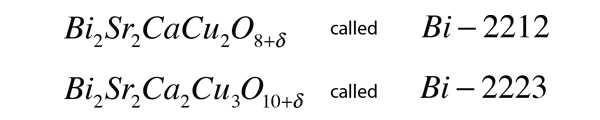
Commonly referred to in current literature as BSCCO, this ceramic has shown critical temperatures as high as 110 K. A leading candidate for power applications of high-temperature superconductors, it is used in two main forms: 通常被称为BSCCO,这种陶瓷的临界温度可高达110 K。作为高温超导体在功率应用中的主要候选材料,它主要以两种形式使用:
![]() A great deal of effort is currently being put into forming superconducting tapes of these materials by a method called "powder in tube" forming. Tapes over a kilometer long have been made from the Bi-2223 material which will sustain a current density above 10,000 A/cm2 at 77 K. The Bi-2212 material must be kept below 20K, but is superior at those temperatures. 目前,许多努力正致力于通过一种称为“管内粉末”成型的方法来制造这些材料的超导带材。已成功制造出超过一公里长的Bi-2223带材,其在77K时可维持超过10,000 A/cm²的电流密度。而Bi-2212材料则必须在20K以下使用,但在那些温度下表现更优。
|
Index Superconductivity concepts Reference Lubkin 索引 超导概念 参考 Lubkin | ||
|
Go Back
返回 |
"Powder in Tube" Forming管内粉末成形
One of the leading high-temperature superconductors is BSCCO, but it is brittle, granular and of limited ductility - nightmarish properties for producing the necessary wires and coils needed for superconducting magnets and power applications. A current method produces BSCCO in powder form and then packs the powder tightly into a cylindrical silver billet. The filled tube is then repeatedly drawn and formed into a cylinder of about 1 mm diameter. A group of such filaments are rolled together and deformed into a tape of width about 4 mm and thickness less than 0.2 mm. A series of heat treatments finishes the production of the tape. Large numbers of such tapes or filaments have been used to make superconductors over a kilometer in length.
一种重要的高温超导体是BSCCO,但它具有脆性、颗粒性和有限的延展性——这些性质对于制造超导磁体和功率应用所需的线圈和导线来说是噩梦般的。目前的一种方法是将BSCCO制成粉末,然后将其紧密地压入圆柱形银锭中。填充的管状物随后被反复拉拔并形成直径约1毫米的圆柱体。一组这样的丝线被卷在一起并变形为宽约4毫米、厚度小于0.2毫米的带状物。一系列的热处理工艺完成带状物的生产。大量这样的带状物或丝线已被用于制造长度超过一公里的超导体。 |
Index Superconductivity concepts Reference Lubkin 索引 超导概念 参考 Lubkin | ||
|
Go Back
返回 |
Thallium-Barium-Copper Oxide铊-鉀-銅氧化物
The highest critical temperature for the high-temperature superconductors to date is 125 K for thallium-barium-copper oxide ceramic. It's notability at present is just as the record holder. The critical barrier was to get superconductors above liquid nitrogen temperature, and the yttrium superconductor at 92 K provides that advantage.
目前,高温超导体的最高临界温度是125 K,对应于硫化物钡铜氧化物陶瓷。目前它只是保持记录。临界障碍在于使超导体达到液氮温度以上,而钇类超导体在92 K时就提供了这一优势。 |
Index Superconductivity concepts Reference Lubkin 索引 超导概念 参考 Lubkin | ||
|
Go Back
返回 |