The Critical Nature of the Expansion Rate of the Early Universe
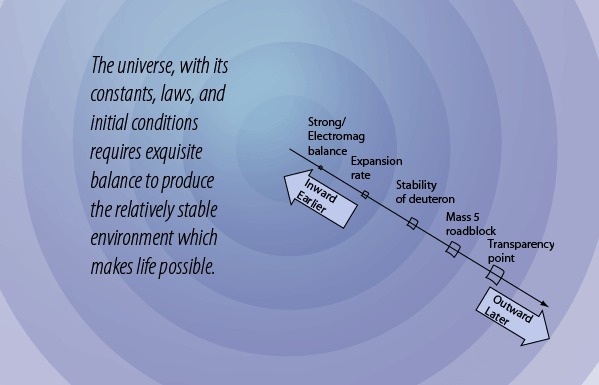
The evidence that the universe is expanding came originally from Hubble and we now characterize it with the Hubble constant and Hubble's law. This evidence helped form the big bang model of the universe along with the 3K background radiation and the hydrogen-helium abundance.
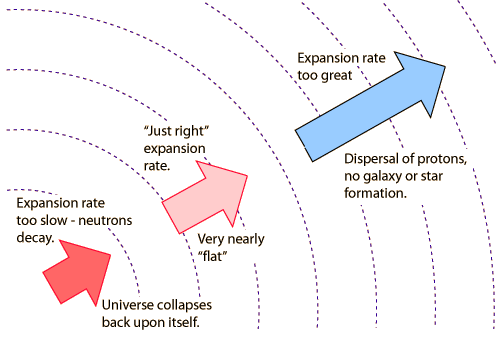
But what determines the expansion rate? It appears to have been determined from the beginning, and the rate of expansion is quite critical to the construction of the universe we see. If the expansion rate were too fast, then matter would not have been able to clump into galaxies and stars. If it were too slow, then it would remain at a high temperature for a longer time period and we could have lost all the neutrons since they spontaneously decay unless they are trapped in an atomic nucleus.
The mass of the universe comes into the picture here as helping determine the expansion rate. If the mass were too large, then the expansion would slow down, stop, and then collapse backward toward the center. The evidence we now have suggests that the mass of the universe is very close to the "critical mass" so that it will continue to expand indefinitely.
| Why is the stability of the deuteron so critical?
氘核的稳定性为什么如此关键? |
HyperPhysics  | R Nave |