Tape Head Action磁头动作
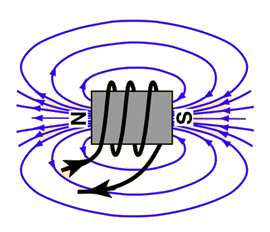
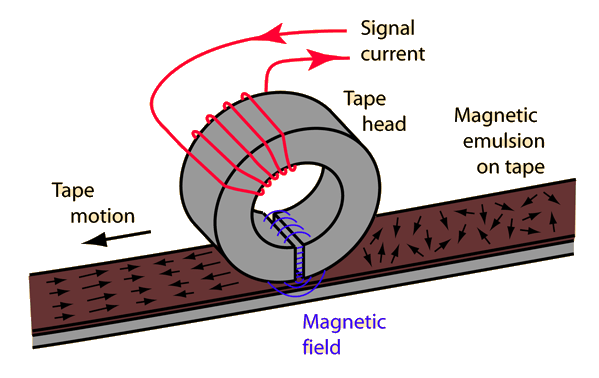
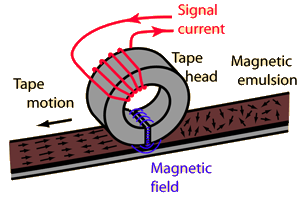
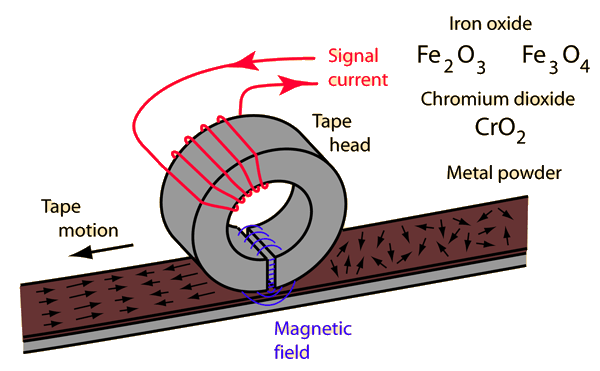
![]() 磁头由带有磁头与磁带接触区域的铁磁材料环制成,这样磁场可以扩展到磁带乳胶上以磁化乳胶。围绕环的线圈携带电流以产生与要记录的信号成比例的磁场。如果已磁化的磁带经过磁头下方,它可以在线圈中感应出电压。因此,同一磁头可用于录音和播放。用于立体声磁带的磁头必须同时记录在两个轨道上。 |
Index Sound reproduction concepts Tape recording concepts Reference Backus p318 索引 声学再现概念 磁带录音概念 参考 Backus p318 | ||
|
Go Back
返回 |
Cassette Tape Head Arrangement磁带录音机磁头排列
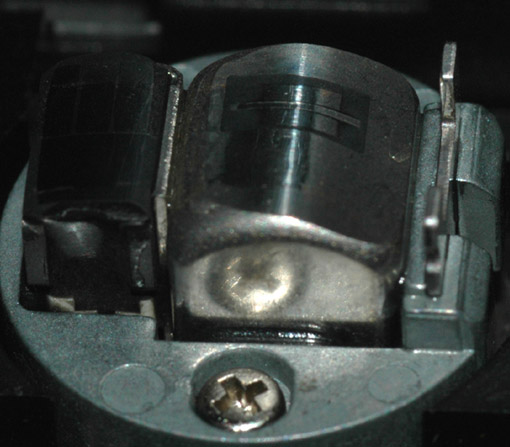
![]() ![]() This is the head structure in a Kenwood tape deck. The structure to the left of the head may be for erasing. The head is about 7 mm from left to right in the image. 这是肯德逊录音机磁带机的磁头结构。磁头左侧的结构可能是用于擦除。在图像中,磁头从左到右约7毫米。
|
Index Sound reproduction concepts Tape recording concepts Reference Rossing Science of Sound Ch 21 索引 声学再现概念 磁带录音概念 参考 Rossing 声学科学 第21章 | ||
|
Go Back
返回 |
Magnetic Emulsions磁性乳液
The recording medium for the tape recording process is typically made by embedding tiny magnetic oxide particles in a plastic binder on a polyester film tape. Iron oxide has been the most widely used oxide, leading to the common statement that we record on a "ribbon of rust". But chromium oxide and metal particles provide a better signal-to-noise ratio and a wider dynamic range. The oxide particles are on the order of 0.5 micrometers in size and the polyester tape backing may be as thin as 0.5 mil (.01 mm). The oxide particles themselves do not move during recording. Rather their magnetic domains are reoriented by the magnetic field from the tape head. 磁带录音过程的记录介质通常是将微小的磁性氧化物颗粒嵌入塑料粘合剂中,附着在聚酯薄膜磁带上。铁氧化物曾是最广泛使用的氧化物,导致了人们常说的“在‘生锈的带子’上记录”的说法。但铬氧化物和金属颗粒提供了更好的信噪比和更宽的动态范围。氧化物颗粒的尺寸通常在0.5微米量级,聚酯薄膜基材可能薄至0.5 mil(0.01 mm)。氧化物颗粒本身在记录过程中并不移动。相反,它们的磁畴是由磁头产生的磁场重新定向的。
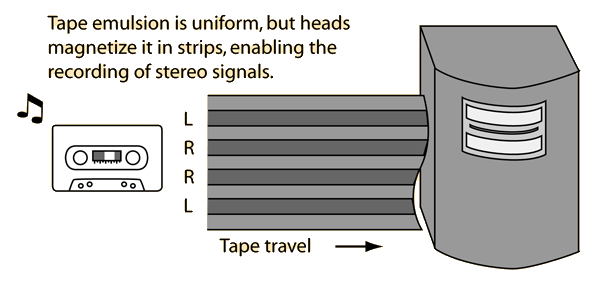
![]() Tape heads for stereo cassette tapes must record on two tracks simultaneously. 立体声磁带的磁头必须同时记录在两个轨道上。
|
Index Sound reproduction concepts Tape recording concepts Reference Rossing Science of Sound Ch 21 索引 声学再现概念 磁带录音概念 参考 Rossing 声学科学 第21章 | ||
|
Go Back
返回 |