Hypothalamus
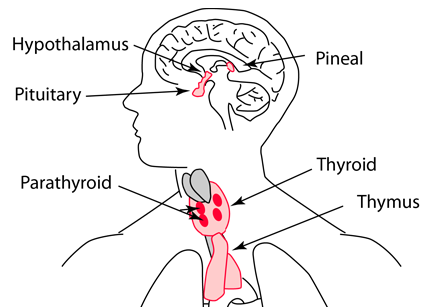 | "The hypothalamus is responsible for the regulation of certain metabolic processes and other activities of the autonomic nervous system. It synthesizes and secretes certain neurohormones, called releasing hormones or hypothalamic hormones, and these in turn stimulate or inhibit the secretion of hormones from the pituitary gland. The hypothalamus controls body temperature, hunger, important aspects of parenting and attachment behaviors, thirst, fatigue, sleep, and circadian rhythms." 下丘脑负责调节某些代谢过程及其他自主神经系统的活动。它合成并分泌某些神经激素,称为释放激素或下丘脑激素,这些激素会刺激或抑制垂体分泌激素。下丘脑控制体温、食欲、重要的育儿和依恋行为、口渴、疲劳、睡眠以及昼夜节律。 |
The hypothalamus contains the "set point" for keeping your body core temperature within about 1°C of 98.6°F (37°C). "When your body temperature drops, the hypothalamus activates various effector mechanisms that raise your body temperature, including shivering (which generates heat through muscular activity), constriction of blood supply to the skin (which reduces heat loss), and elevation of metabolic rate (which generates heat). When normal body temperature is restored, the hypothalamus switches off these temperature control mechanisms."(Audesirk & Audesirk, Ch 26)
The hypothalamus synthesizes the antidiuretic hormone (ADH) which is then released by the pituitary gland. It is used in controlling the content of water in the blood by the kidney.
The hypothalamus controls the secretions from the pituitary gland. The description in Audesirk & Audesirk, Ch 32 is "If the endocrine system is the body's postal service, then the hypothalamus is the main post office and the pituitary gland is the administrative headquarters."
The hypothalamus was described as being about the size of an almond, and the pituitary gland attached to it about the size of a pea. Despite their diminutive size, they are critical components of the endocrine system.
| Hypothalamus Wiki
下丘脑维基 |
| This material is part of a brief overview of the topics studied in biology with the intent to highlight the connections to basic ideas in physics and physical science.
这部分内容是对生物学中研究主题的简要概述,旨在突出其与物理学和物理科学基本概念的联系。 |
Reference
Audesirk & Audesirk
Ch 26,32
Thibodeau & Patton
Ch 16
| HyperPhysics***** Biology
HyperPhysics ***** 生物学 | R Nave |