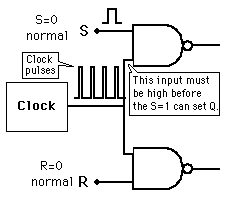
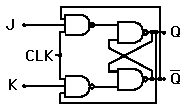
Clocked Set-Reset Flip-flop
时钟 置位复位 边沿触发器
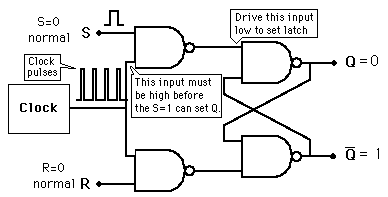
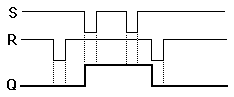
| Example Output
示例输出 |
When the signal line S goes high, the other line to the NAND gate from the pulse steering circuit must also be high for it to generate a low output. Likewise, a clock pulse must have the reset NAND gate high to receive a high RESET pulse. Therefore all transitions are synchronized to the clock.
当信号线S变高时,从脉冲选择电路到NAND门的另一条线路也必须变高,以便该门产生低电平输出。同样,时钟脉冲必须使复位NAND门处于高电平,以便接收高电平的复位脉冲。因此,所有转换都同步于时钟。
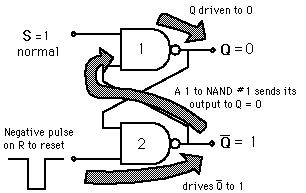
| Set-reset Flip-flop
置位-复位翻转器 | NAND-gate Latch
NAND逻辑门锁存器 |
Electronics concepts
Digital circuits
索引 电子学概念 数字电路
| HyperPhysics*****Electricity and magnetism
HyperPhysics ***** 电磁学 | R Nave |
返回