Bilingual edition: English is preserved and Chinese follows each unit. Terminology uses the confirmed v20260916 glossary; automated semantic review remains traceable.
中英双语版:英文原文完整保留,中文紧随对应单元;术语采用 v20260916 确认表,自动语义审校结果可追溯。

The Clarinet

萨克斯管

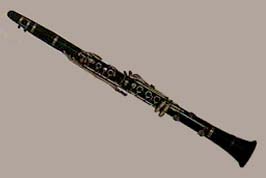
The clarinet consists of a closed cylindrical air column with a bell-shaped opening at one end. It's mouthpiece holds a single reed, in contrast to the double reed of the oboe family. It is typically constructed of wood. The traditional wood is an ebony from Africa, Asia or South America commonly referred to as grenadilla wood. Hard and black, this wood is capable of taking a high polish. The instrument most commonly used today is known as the B-flat clarinet; the next most common is the clarinet in A. The B-flat clarinet is about 60 cm (23.6 in) long and has a range of more than three octaves.

萨克斯管由一个封闭的圆柱形气柱组成,一端有一个喇叭形的开口。它有一个单簧片,与木管乐器家族中的双簧片形成对比。它通常由木头制成。传统的木材是一种来自非洲、亚洲或南美洲的乌木,通常称为 grenadilla 木。这种木材坚硬且黑色,能够打磨出很高的光泽。今天最常用的乐器称为B调萨克斯管;次之的是A调萨克斯管。B调萨克斯管长约60厘米(23.6英寸),音域超过三个八度。
Further details
进一步详情
Sample waveforms
示例波形
Index

Woodwind instruments

Musical instruments

Reference
Gibson
索引木管乐器 音乐乐器 参考 Gibson
 
HyperPhysics***** Sound
HyperPhysics ***** 声音
R Nave
Go Back
返回


The Clarinet

萨克斯管

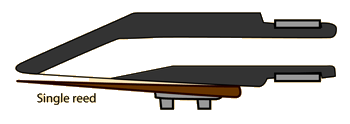
The clarinet consists of a closed cylindrical air column with a bell-shaped opening at one end. It's mouthpiece holds a single reed, in contrast to the double reed of the oboe family. The reed is made from cane, and reeds from southern France are favored. The base of the reed is at least 3 mm thick and the reeds for the clarinets used in the U.S. are 69 mm long. The base width specification is 11.55 mm and the tip 13.05 mm. The body of the instrument is typically constructed of wood. The instrument most commonly used today is known as the B-flat clarinet; the next most common is the clarinet in A. The B-flat clarinet is about 60 cm (23.6 in) long and has a range of more than three octaves. There are also soprano clarinets (range D3 to F6) and bass clarinets some 94 cm in length which cover D2 to F5flat.

萨克斯管由一个封闭的圆柱形气柱组成,一端有一个喇叭形的开口。它的嘴子上装有一个单簧片,与木管乐器家族中的双簧片形成对比。簧片由竹制成,法国南部的簧片更受欢迎。簧片的底部至少有3毫米厚,用于美国的萨克斯管的簧片长度为69毫米。簧片的底部宽度规格为11.55毫米,尖端为13.05毫米。乐器的主体通常由木头制成。今天最常用的萨克斯管称为降B调萨克斯管;次之是A调萨克斯管。降B调萨克斯管长约60厘米(23.6英寸),音域超过三个八度。还有女高音萨克斯管(音域D3到F6)和低音萨克斯管,长度约为94厘米,音域为D2到F5降。

The clarinet is a versatile member of the orchestra, the principal treble woodwind of the concert band. The clarinet is a transposing instrument--its part in the score is written at a different pitch from the one actually sounded.

萨克斯管是交响乐团中非常重要的成员,是管弦乐队中的主要高音木管乐器。萨克斯管是一种移调乐器——其在乐谱上的音高与实际发出的音高不同。

Since a closed air column does not produce even harmonics, the holes in the column must cover a wider range that those of the flute, carrying the instrument up to the third harmonic of the full column. The use of a register key can then cause the instrument to sound its third harmonic and contribute the notes of the higher register.

由于封闭的空气柱不产生偶数泛音,柱体中的孔必须覆盖比 flute 更宽的范围,使乐器能够达到整个柱体的第三泛音。此时使用注册键可以使乐器发出第三泛音,并产生高音区的各音符。
Why is the mouthpiece considered a "closed end"?
为什么嘴孔被视为一个‘封闭端’?
Clarinet illustration
单簧管示意图
Index

Woodwind instruments

Musical instruments
索引 长笛类乐器 音乐乐器
 
HyperPhysics***** Sound
HyperPhysics ***** 声音
R Nave
Go Back
返回


Register Key of Clarinet

单簧管按键

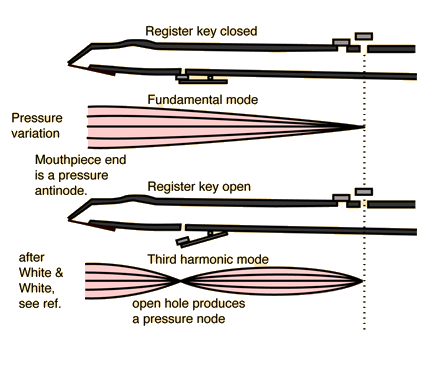
The lower notes of the clarinet are achieved by opening holes along the closed cylindrical air column to shorten the air column and raise its fundamental frequency. A higher series of notes, called its "upper register" can be produced by forcing the air column to vibrate at its third harmonic frequency instead of the fundamental. This upper register is achieved by using a register key or "speaker key" which opens an additional hole in the side of the instrument close to the mouthpiece. This open hole destroys the fundamental mode and forces the air column up to its next resonance, which is the third harmonic (closed cylinders produce only odd harmonics). The open hole produces a pressure node at a point where the fundamental mode produces a significant pressure variation, so that the lowest vibrational mode cannot be sustained. The musical interval between the lower and upper registers is an octave plus a musical fifth, compared to an octave interval for overblowing the flute.

长笛的低音是通过沿封闭的圆柱形气柱开孔来缩短气柱,从而提高其基频而实现的。通过迫使气柱在第三谐波频率振动而不是基频振动,可以产生一系列更高的音,这些音被称为“高音区”。高音区是通过使用“注册键”或“发声键”实现的,该键在乐器靠近吹口的一侧打开一个额外的孔。这个开放的孔破坏了基频模式,并迫使气柱进入其下一个共振,即第三谐波(封闭圆柱体只产生奇数谐波)。开放的孔在基频模式产生显著压力变化的点上产生一个压力节点,因此最低的振动模式无法持续。与长笛的超吹音相比,低音区和高音区之间的音程是一个八度加一个五度。
Illustration of register key
注册键示意图
Clarinet discussion
单簧管讨论
Index

Woodwind instruments

Musical instruments
索引 长笛类乐器 音乐乐器
 
HyperPhysics***** Sound
HyperPhysics ***** 声音
R Nave
Go Back
返回


Register Key Action in Clarinet

单簧管的注册按键作用

When the register key is pressed, it opens a hole in the side of the instrument, producing a pressure node at that point. This destroys the fundamental mode and the frequency jumps to the third harmonic.

当注册键被按下时,它会在仪器侧面开一个孔,在该点产生一个压力节点。这破坏了基模,频率跃迁到第三谐波。
Discussion of register key
寄存器键讨论
Clarinet discussion
单簧管讨论
Index

Woodwind instruments

Musical instruments

Reference
White & White
Ch. 18
索引 长笛类乐器 音乐乐器 参考 White & White 第18章
 
HyperPhysics***** Sound
HyperPhysics ***** 声音
R Nave
Go Back
返回


Clarinet Mouthpiece a Closed End?

单簧管嘴子是封闭端吗?

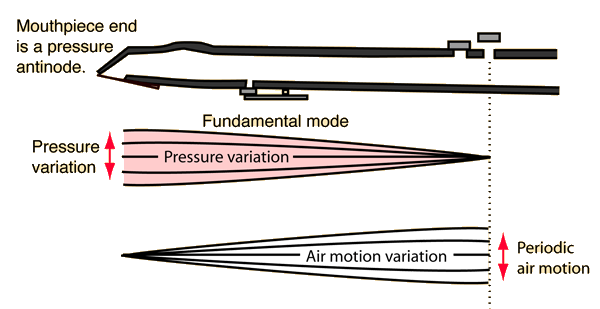
It's obviously not closed, you're blowing air through it! Nevertheless, it acts acoustically as a closed end, so that the clarinet acts as a closed-end cylinder.

它显然不是封闭的,你是在用气吹它!然而,它在声学上相当于一个封闭端,因此萨克斯管相当于一个封闭端的圆柱体。

The action of the player's mouth on the reed causes the pressure oscillation to be greatest at the mouthpiece, a pressure antinode. Air rushing back and forth into the first open hole creates a motion antinode at that point which represents the other end of the oscillating air column. That in-and-out air motion alternately squeezes and expands the air in the column. The squeezing and expanding effect is greatest at the mouthpiece end, contributing to a large pressure variation there. The distance between a node and the closest antinode is a quarter wavelength, so the length of the vibrating air column of the clarinet represents a quarter wavelength for the fundamental frequency produced for this closed cylindrical column.

玩家的口腔对簧片的作用使压力振荡在吹口处最大,形成一个压力节点。空气来回进入第一个开放孔,该点形成一个运动节点,代表振荡空气柱的另一端。来回的空气运动交替压缩和膨胀空气柱中的空气。压缩和膨胀效应在吹口处最大,导致该处压力变化显著。节点与最近的抗节点之间的距离是一个四分之一波长,因此萨克斯管振动空气柱的长度代表了对于该封闭圆柱形柱体产生的基频而言,是一个四分之一波长。
Nodes and antinodes
节点和波腹
Action of clarinet register key
单簧管音键作用
Clarinet illustration
单簧管示意图
Visualization of nodes and antinodes in air column
空气柱中节点和波节的可视化
Index

Woodwind instruments

Musical instruments
索引 长笛类乐器 音乐乐器
 
HyperPhysics***** Sound
HyperPhysics ***** 声音
R Nave
Go Back
返回