History of "Radioactive Red" Fiestaware
‘放射性红色’菲斯特陶器的历史
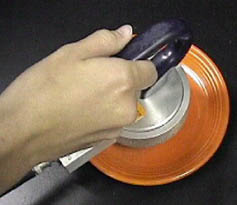
|
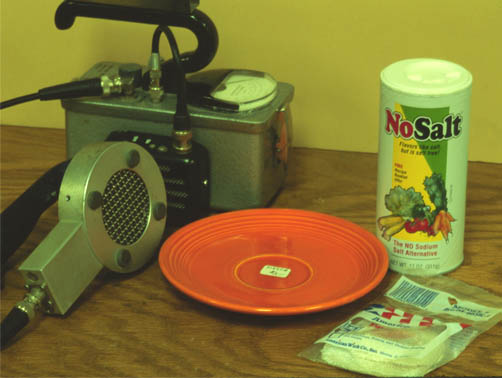
Fiesta ware was produced by the Homer Laughlin Company of West Virginia which introduced the line of dinnerware in 1936. There was a choice of five colors: red, blue, green, yellow and ivory. Red was the first color that the company selected when designing the product, and blue was the second (these were the colors of the Fiesta ware that Andy Warhol collected). Since the idea was to mix and match the dinnerware, the five colors had to be compatible.
Fiesta系列餐具由西弗吉尼亚州的霍默·拉根公司生产,该公司于1936年推出了这一餐具系列。该系列有五种颜色可供选择:红色、蓝色、绿色、黄色和象牙色。红色是公司设计产品时首先选择的颜色,蓝色是第二个选择的颜色(这些颜色是安迪·沃霍尔收藏的Fiesta餐具的颜色)。由于设计意图是混合搭配餐具,因此这五种颜色必须相互兼容。
|
Fiesta red has always been the most popular color even though it was the most expensive. The higher price was due to the cost of the raw materials and the fact that the production of the red required a greater level of control during the firing process.
Fiesta红一直是最受欢迎的颜色,尽管它是最昂贵的。更高的价格是由于原材料的成本,以及红色生产过程中需要更高的控制水平。 The red color was achieved by adding uranium oxide in the glaze - measurements have indicated that by weight, up to 14% of the glaze might be uranium. How much glaze was eemployed per plate is unclear but it has been estimated that a single plate contains 4.5 grams of uranium (Buckley et al). Piesch et estimate the glaze thickness at 0.2mm.
红色是通过在釉料中添加氧化铀实现的——测量结果表明,按重量计算,釉料中可能含有高达14%的铀。但每块瓷砖使用的釉料量尚不清楚,不过估计每块瓷砖含有4.5克铀(Buckley等)。Piesch等人估计釉层厚度为0.2毫米。 Since its uranium could be used in the production of an atomic bomb, Fiesta red became a victim of World War II when the US government confiscated the company's stocks of uranium. Fiesta red disappeared until 1959 when production resumed, this time using the depleted uranium left over after uranium enrichment for weapons use rather than the original natural uranium.
由于其铀可以用于制造原子弹,Fiesta红在二战期间成为受害者,美国政府没收了该公司储存的铀。Fiesta红消失直到1959年生产恢复,这次使用的是用于武器用途铀浓缩后剩余的低浓缩铀,而不是原来的天然铀。 In 1969 the entire Fiesta ware line was discontinued, and in its place the company produced what was called Fiesta Ironstone. The latter, which was only manufactured in Fiesta red (aka Mango Red), didn't last long. It was discontinued in 1973. This was the end of Fiesta red. Years later, in 1986, a new line of Fiesta ware was introduced but without the red color.
1969年,整个Fiesta系列产品停产,公司随后推出了一种名为Fiesta Ironstone的新产品。后者仅以Fiesta红(又称芒果红)生产,但寿命不长,于1973年停产。这标志着Fiesta红的终结。多年后,1986年,公司又推出了一条新的Fiesta系列产品,但不再包含红色。 The above history was excerpted from "Radioactive Consumer Products, Museum Directory", 2009, Oak Ridge Associated Universities, where samples of Fiesta ware were exhibited. That guide also has details about measured radiation doses associated with the uranium-glazed ceramic products.
上述历史资料摘自《放射性消费品,博物馆目录》,2009年,奥克希尔德大学出版,其中展示了 Fiesta 器皿样品。该目录还包含有关铀釉陶瓷制品与辐射剂量测量的详细信息。 Buckley, et al., Environmental Assessment of Consumer Products Containing Radioactive Material. Nuclear Regulatory Commission. NUREG/CR-1775. 1980.
Buckley 等人,含放射性材料的消费产品环境影响评估。核监管委员会。NUREG/CR-1775。1980。 Piesch, E, Burgkhardt, B, and Acton, R. Dose Rate Measurements in the Beta-Photon Radiation Field from UO2 Pellets and Glazed Ceramics Containing Uranium. Radiation Protection Dosimetry 14(2). 109-112, 1986.
Piesch, E, Burgkhardt, B, 和 Acton, R. 在含铀的UO₂小球和釉面陶瓷的β-光子辐射场中进行剂量率测量。辐射防护剂量学 14(2). 109-112, 1986. |