Carbonic Anhydrase
碳酸酐酶
Carbonic anhydrase is an important enzyme which enables the human body to convert the metabolic product CO2 to carbonic acid, H2CO3, in the red blood cells for transport to the lungs. The enzyme action of carbonic anhydrase can speed the conversion of CO2 and water to the bicarbonate ion by a factor of a million.
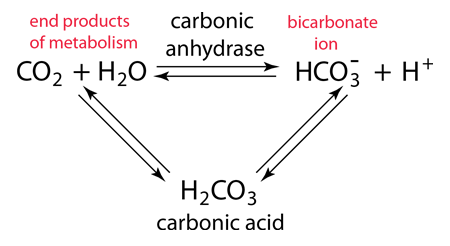
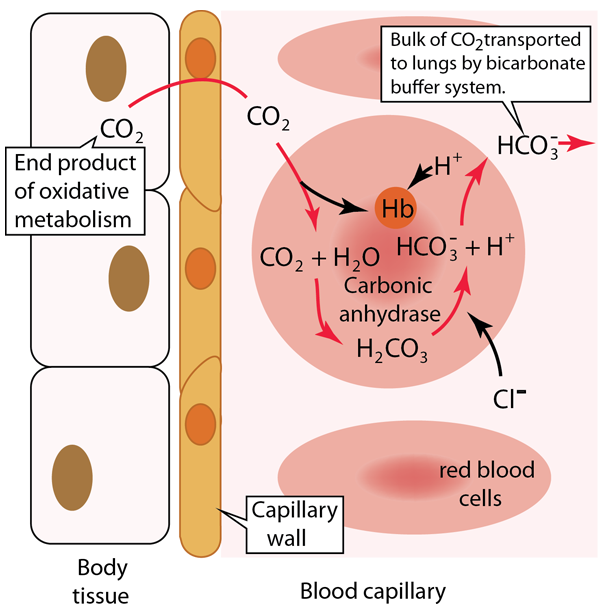
碳酸酐酶是一种重要的酶,它能使人体将代谢产物二氧化碳转化为碳酸(H₂CO₃),在红细胞中运输到肺部。碳酸酐酶的催化作用可使二氧化碳和水转化为碳酸氢根离子的速度提高百万倍。当红细胞到达肺部时,同一种酶又帮助将碳酸氢根离子重新转化为二氧化碳,我们通过呼吸排出。在人体中,它含有锌作为关键成分。锌与蛋白质中三个组氨酸氨基酸残基的氮原子结合。
"Carbonic anhydrase also aids in the regulation of fluid and pH balance and is involved in producing essential stomach acid. The enzyme also plays a role in vision. When it is defective, fluid can build up and cause glaucoma. The enzyme is one of the fastest known, catalyzing up to one million reactions per second."(Denton)
| Carbonic Anhydrase
碳酸酐酶 |
碳酸酐酶也参与调节体液和pH平衡,并参与产生胃酸。该酶在视觉中也起作用。当它功能异常时,体液可能积聚并导致青光眼。该酶是已知最快的酶之一,每秒可催化多达一百万次反应。
Biochemical concepts
Chemistry concepts
Reference
Carbonic Anhydrase
Denton Miracle of the Cell, Ch 6
News-medical
索引 生物化学概念 化学概念 参考 碳酸酐酶 Denton 命题中的细胞,第6章 新闻-医学
| HyperPhysics*****Chemistry
HyperPhysics ***** 化学 | R Nave |
返回