Bilingual edition: English is preserved and Chinese follows each unit. Terminology uses the confirmed v20260916 glossary; automated semantic review remains traceable.
中英双语版:英文原文完整保留,中文紧随对应单元;术语采用 v20260916 确认表,自动语义审校结果可追溯。

Apollo Moon Exploration
阿波罗月球探索

The Apollo Moon exploration missions were the culmination of a long series of missions beginning in 1964 which included the U.S. Ranger, Surveyor, and Orbiter programs and the U.S.S.R. Luna and Zond programs. There were also six one-man Earth orbiting missions (Mercury) and ten two-man orbital flights (Gemini) in the early sixties in preparation for lunar missions. The Apollo 7 mission orbited the Earth in final preparation for the Moon vogages and the Apollo 8-10 missions orbited the Moon but did not land. In the period 1969 to 1972, Apollo 11, 12 and Apollo14 - 17 landed on the moon. Apollo 13 experienced an explosion enroute and was looped around the Moon and back to the Earth barely in time to save the crew.

阿波罗登月任务是始于1964年的一系列长期任务的 culmination,其中包括美国的Ranger、Surveyor和Orbiter计划,以及苏联的Luna和Zond计划。此外,20世纪60年代初还有六次单人地球轨道飞行(Mercury)和十次双人轨道飞行(Gemini),为登月任务做准备。阿波罗7号任务绕地球飞行,为登月任务做最后准备,阿波罗8至10号任务绕月飞行但未着陆。在1969年至1972年间,阿波罗11号、12号和阿波罗14至17号任务成功登月。阿波罗13号在前往月球途中发生爆炸,但最终绕月球一圈后返回地球,勉强及时救回了机组人员。

Apollo 11 and 12 landed in smooth lunar maria, while Apollo 14-17 reached more rocky and mountainous regions to widen the variety of samples collected.

阿波罗11号和12号降落在光滑的月海区域,而阿波罗14号至17号则到达了更加崎岖和多山的区域,从而扩大了所采集样本的种类。
Apollo 7-10
阿波罗7-10
Apollo 11
阿波罗11号
Apollo 12
阿波罗12号
Apollo 13
阿波罗13号
Apollo 14
阿波罗14号
Apollo 15
阿波罗15号
Apollo 16
阿波罗16号
Apollo 17
阿波罗17号
Apollo Spacecraft
阿波罗航天器
Landing sites
着陆点


Online references:
NASA's Apollo Program site
Wiki: Apollo Program
NASA History: The Apollo Program
Apollo landing sites
在线参考:NASA的阿波罗计划网站 Wiki:阿波罗计划 NASA历史:阿波罗计划 着陆地点
Index

Solar System Illustration

Solar System Concepts

Moon Concepts
太阳系索引 图表 太阳系概念 月球概念
 
HyperPhysics********** Astrophysics
HyperPhysics ********** 天体物理学
R Nave
Go Back
返回


Apollo 7 to Apollo 10

阿波罗7号至阿波罗10号

Apollo 7, the first manned mission in the Apollo program, was launched on October 11, 1968. This eleven-day Earth orbital mission for three astronauts gave the opportunity for testing the command module. It was also the first manned launch of the Saturn 1B launch vehicle.

阿波罗7号是阿波罗计划中的首次载人任务,于1968年10月11日发射。这趟为期11天的地球轨道任务为三名宇航员提供了测试指令舱的机会。它也是土星1B运载火箭的首次载人发射。

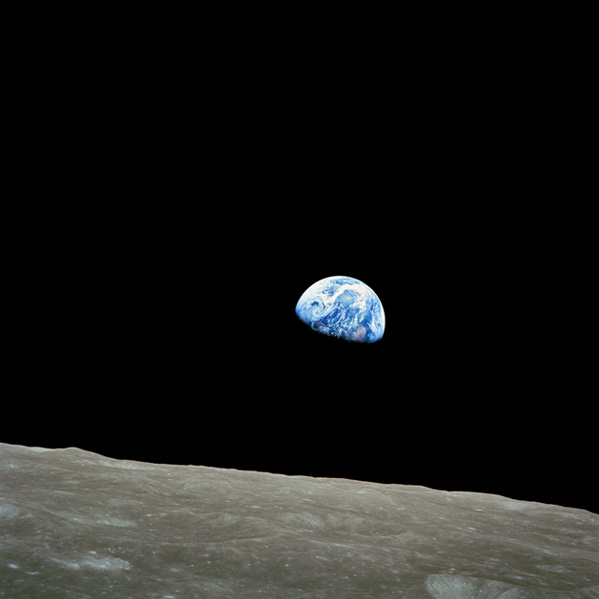
Apollo 8, launched on December 21, 1968, was the first manned vehicle to navigate around the Moon. It was during this mission that the famous "Earthrise" photo, shown below, was made by Astronaut William Anders.

1968年12月21日发射的阿波罗8号是第一个绕月航行的载人飞船。这次任务中,宇航员威廉·安德斯拍摄了著名的“地球升起”照片,如下所示。

Earthrise

The Apollo 9 and 10 missions also looped around the Moon and carried the Lunar Module for testing, but were not intended to land. Apollo 8-10 were launched with the Saturn V launch vehicle.

阿波罗9号和10号任务也绕月飞行,并携带登月舱进行测试,但并未计划着陆。阿波罗8号至10号均使用土星五号运载火箭发射。

The images and text are extracted from the NASA sites, which may be consulted for more details.

这些图像和文字摘自NASA网站,如需更多细节可参阅。


Online references:
NASA's Apollo Program site
Earthrise Online 参考:NASA 的阿波罗计划网站
Index

Solar System Illustration

Solar System Concepts

Apollo Program
索引 太阳系图示 太阳系概念 阿波罗计划
 
HyperPhysics********** Astrophysics
HyperPhysics ********** 天体物理学
R Nave
Go Back
返回


Apollo 11

阿波罗11号

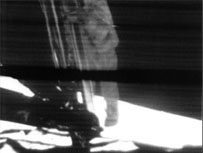
Launched on July 16, 1969, Apollo 11 made history with the first manned landing on the Moon and the first man to set foot on the Moon. Neil Armstrong was the first human to set foot on the Moon, followed by Buzz Aldrin.

1969年7月16日发射的阿波罗11号创造了历史,实现了人类首次登月和第一位踏上月球的人。尼尔·阿姆斯特朗是第一个踏上月球的人,随后是Buzz Aldrin。

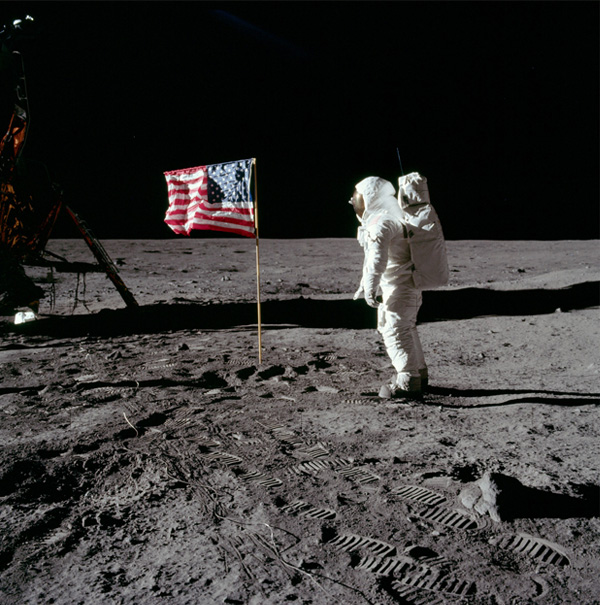
Astronaut Buzz Aldrin salutes the flag during the Apollo 11 mission.

The images and text are extracted from the NASA sites, which may be consulted for more details.

这些图像和文字摘自NASA网站,如需更多细节可参阅。


Online references:
NASA's Apollo Program site
Apollo 11 Mission
宇航员Buzz Aldrin在阿波罗11号任务期间向旗帜致意。参考链接:NASA的阿波罗计划网站 阿波罗11号任务
Index

Solar System Illustration

Solar System Concepts

Apollo Program
索引 太阳系图示 太阳系概念 阿波罗计划
 
HyperPhysics********** Astrophysics
HyperPhysics ********** 天体物理学
R Nave
Go Back
返回


Apollo 12

阿波罗12号

Launched on November 14, 1969, the Apollo 12 mission landed the manned Lunar Module within 200 meters of the Surveyer 3 probe. The second manned lunar landing mission carried astronauts Charles (Pete) Conrad, Richard F. Gordon and Alan L. Bean. A precision landing was made on the Moon's surface using the onboard automatic guidance system, touching down only 183 meters from the intended target point. This achieved an important goal of this mission because a precise landing would be necessary to explore the more rugged terrain on the lunar highlands on subsequent missions.

1969年11月14日发射的阿波罗12号任务,使载人登月舱在勘测者3号探测器附近200米范围内着陆。这是第二次载人登月任务,宇航员包括查尔斯(皮特)康拉德、理查德·F·戈登和阿兰·L·贝恩。使用登月舱上的自动导航系统,实现了精确着陆,最终在预定目标点仅183米处着陆。这一成就实现了该任务的重要目标,因为后续任务需要在月球高地更为崎岖的地形上进行探索时,精确着陆是必要的。

There were two "EVAs" or explorations on the lunar surface. On the first, of four hours duration, they placed a solar wind experiment and collected lunar samples and core-tube specimens. On the second EVA they covered 1311 meters on the lunar surface collecting samples. Most of the samples were basalt and radiometric dating assessed them as hundreds of millions of years younger than the Apollo 11 samples.

有两次‘月球漫步’或月球表面探索。第一次持续四小时,他们放置了一个太阳风实验,并采集了月球样本和芯管样本。第二次月球漫步他们在月球表面行走1311米,采集了样本。大部分样本为玄武岩,放射性测年显示它们比阿波罗11号样本年轻数亿年。

After liftoff from the lunar surface, the ascent stage was remotely guided to impact the lunar surface to provide an active seismic source for the seismic detection equipment that had been placed on the Moon.

月球着陆后,上升段被远程引导撞击月球表面,以提供一个主动的地震源,用于已放置在月球上的地震探测设备。

The images and text are extracted from the NASA sites, which may be consulted for more details.

这些图像和文字摘自NASA网站,如需更多细节可参阅。


Online references:
NASA's Apollo Program site
Apollo 12 Mission
在线参考:NASA的阿波罗计划网站 阿波罗12号任务
Index

Solar System Illustration

Solar System Concepts

Apollo Program
索引 太阳系图示 太阳系概念 阿波罗计划
 
HyperPhysics********** Astrophysics
HyperPhysics ********** 天体物理学
R Nave
Go Back
返回


Apollo 13

阿波罗13号

Launched on April 11, 1970, Apollo 13 experienced an explosion enroute and was looped around the Moon and back to the Earth barely in time to save the crew. Plagued from the beginning, there was an early shutdown of the one of the engines and then an unrelated explosion in the service module. The crew took refuge in the lunar module and returned to the Earth after a single pass around the Moon.

1970年4月11日发射的阿波罗13号在飞行途中发生爆炸,几乎在最后一刻成功绕月返回地球,救出了机组人员。从一开始就出现问题,其中一台发动机早期关闭,随后服务舱内又发生了另一起无关的爆炸。机组人员躲进登月舱,完成了一次绕月飞行后返回地球。

The images and text are extracted from the NASA sites, which may be consulted for more details.

这些图像和文字摘自NASA网站,如需更多细节可参阅。


Online references:
NASA's Apollo Program site
Apollo 13 Mission
在线参考:NASA的阿波罗计划网站 阿波罗13号任务
Index

Solar System Illustration

Solar System Concepts

Apollo Program
索引 太阳系图示 太阳系概念 阿波罗计划
 
HyperPhysics********** Astrophysics
HyperPhysics ********** 天体物理学
R Nave
Go Back
返回


Apollo Spacecraft

阿波罗航天器

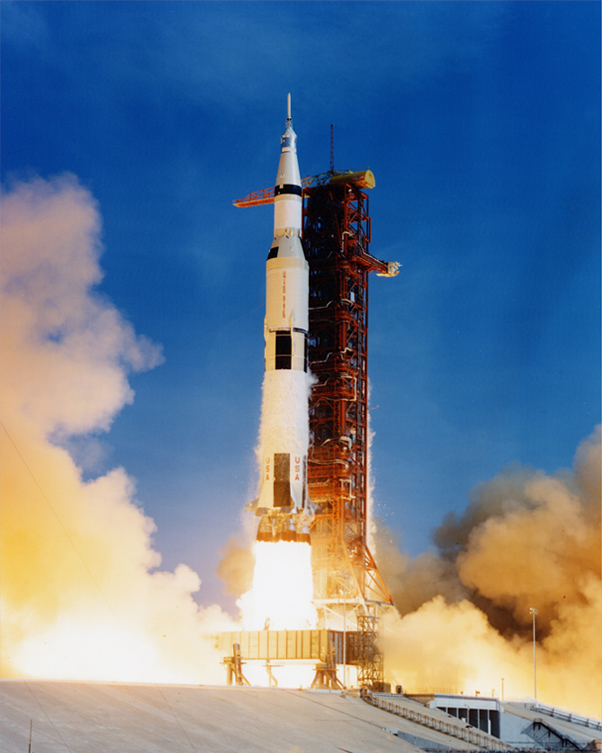
The Saturn V rocket lifts Apollo 11 on July 16, 1969

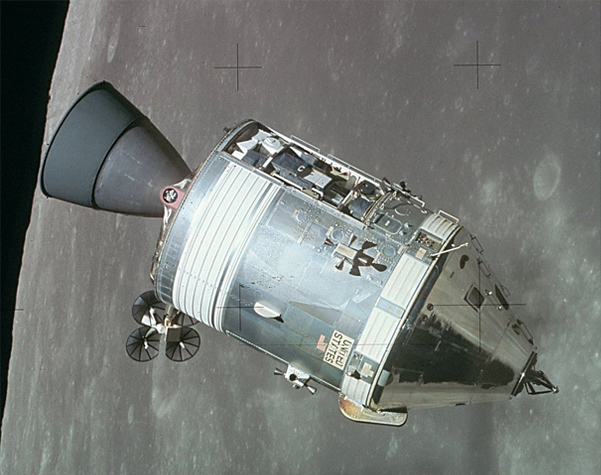
The Command/Service Module (CSM) over the lunar surface.

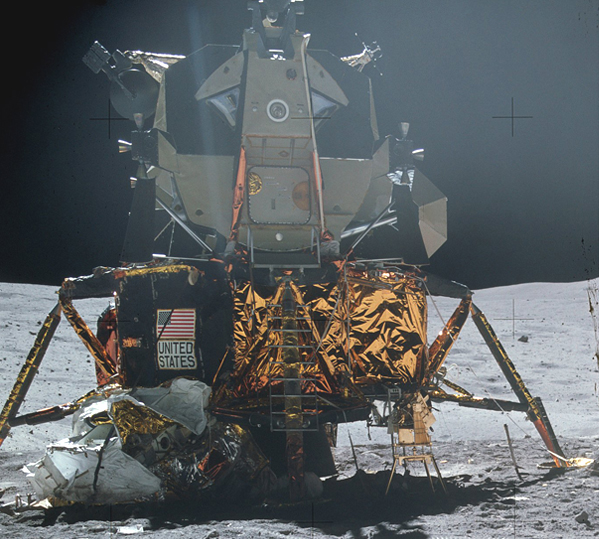
The Lunar Module of Apollo 16

The images and text are extracted from the NASA sites, which may be consulted for more details.

这些图像和文字摘自NASA网站,如需更多细节可参阅。


Online references:
NASA's Apollo Program site
Apollo Spacecraft
土星五号火箭于1969年7月16日将阿波罗11号送入轨道,其指令舱/服务舱(CSM)飞越月球表面。阿波罗16号的月球舱在线参考资料:NASA的阿波罗计划网站 阿波罗航天器
Index

Solar System Illustration

Solar System Concepts

Apollo Program
索引 太阳系图示 太阳系概念 阿波罗计划
 
HyperPhysics********** Astrophysics
HyperPhysics ********** 天体物理学
R Nave
Go Back
返回