Bilingual edition: English is preserved and Chinese follows each unit. Terminology uses the confirmed v20260916 glossary; automated semantic review remains traceable.
中英双语版:英文原文完整保留,中文紧随对应单元;术语采用 v20260916 确认表,自动语义审校结果可追溯。

Longer Reverberation for Lows

低频的混响更长

It is a common experience for more distant listeners to music to conclude that it is deficient in bass. This bass problem is a characteristic of the ear since the ear shows progressively greater discrimination against low frequencies as the sound gets softer.

对于更远处的听众来说,常常会认为音乐缺乏低音。这种低音问题实际上是耳朵的特性,因为随着声音变弱,耳朵对低频的辨别能力逐渐增强。

This problem can be partially overcome by designing the auditorium so that its reverberation time for low frequencies is greater than that for high frequencies. This gives a natural-sounding bass boost to sound in the rear of an auditorium. Actually, the longer reverberation time for lows usually happens naturally, particularly if a lot of wood is used in the construction since wood absorbs high frequencies more than lows. However, some construction types selectively absorb low frequencies and are to be avoided in music-making areas. Typical thin wood paneling on studs selectively absorbs low frequencies and thus should be avoided in auditoriums.

这个问题可以通过设计礼堂,使其低频的混响时间大于高频的混响时间来部分解决。这会使得礼堂后方的声音自然地增强低音。实际上,低频的较长混响时间通常会自然发生,特别是当使用大量木材建造时,因为木材吸收高频比低频更有效。然而,某些建筑类型会特意吸收低频,因此在音乐区域应避免使用。典型的薄木板贴在龙骨上会特意吸收低频,因此在礼堂中应避免使用。
Architectural contributions to good acoustics
对良好声学的建筑贡献
Auditorium examples
礼堂示例
Index

Auditorium acoustics
索引 声学礼堂
 
HyperPhysics***** Sound
HyperPhysics ***** 声音
R Nave
Go Back
返回


Longer Reverberation Time for Lows

低频的混响时间更长

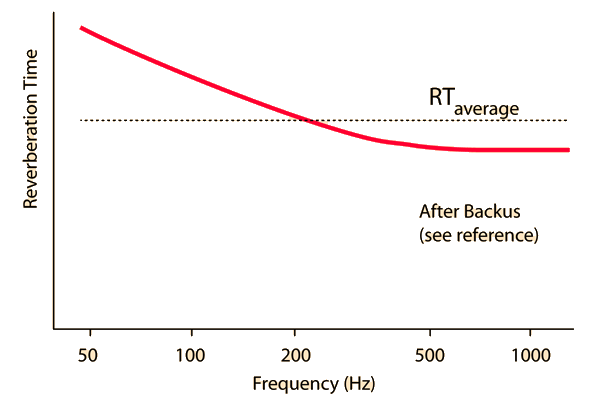
The graph shows a progression to higher reverberation times for low frequencies. It is typical for the reverberation time for low frequencies for a good auditorium to be some 30% higher than the overall average reverberation time. This characteristic helps to deal with the bass loss problem, one of the fundamental problems of auditorium acoustics.

该图显示低频的混响时间较高。对于一个良好的音乐厅来说,低频的混响时间通常比总体平均混响时间高约30%。这一特性有助于解决低音损失问题,这是音乐厅声学中的一个基本问题。
Further discussion
进一步讨论
Auditorium examples
礼堂示例
Index

Auditorium acoustics

Reference
Backus
Ch 9
索引 声学 auditorium 参考 Backus 第9章
 
HyperPhysics***** Sound
HyperPhysics ***** 声音
R Nave
Go Back
返回


Auditorium Examples

听众示例

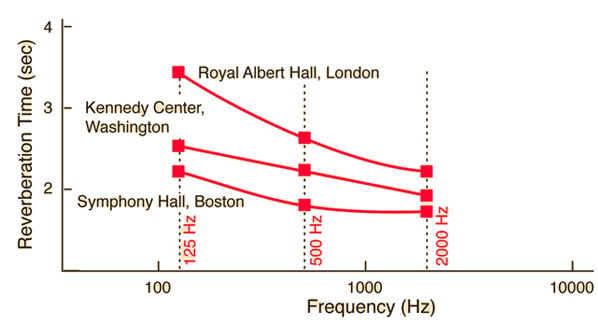
The auditoriums cited below are some of the most outstanding in the world, and they show the consistent pattern of having significantly longer reverberation times for low frequencies. The first column is a measurement of the delay time between direct sound and the first reflected sound, which has been associated with a feeling of "presence" or "intimacy" as perceived by the listener.

下面列举的礼堂是世界上一些最突出的礼堂,它们显示出一个一致的模式,即低频段的混响时间显著更长。第一列是直接声与第一反射声之间的时间差测量,这种时间差与听众感知的“存在感”或“亲切感”有关。
Auditorium
礼堂
t1(floor, ms)
t1(楼层数, 毫秒)
RT(125Hz)
RT(500 Hz)
RT(2000 Hz)
Symphony Hall, Boston
波士顿交响大厅
15
2.2
1.8
1.7
Orchestra Hall, Chicago
芝加哥交响乐团大厅
40
...
1.3
...
Severance Hall, Cleveland
塞弗兰·霍尔,克利夫兰
20
...
1.7
1.6
Carnegie Hall, New York
卡内基音乐厅,纽约
23
1.8
1.8
1.6
Opera House, San Francisco
旧金山歌剧院
51
...
1.7
...
Arie Crown Theatre, Chicago
芝加哥的阿里·克罗恩剧院
36
2.2
1.7
1.4
Royal Festival Hall, London
伦敦皇家节日大厅
34
1.4
1.5
1.4
Royal Albert Hall, London
伦敦皇家阿尔伯特音乐厅
65
3.4
2.6
2.2
Concertgebouw, Amsterdam
阿姆斯特丹的 Concertgebouw
21
2.2
2.1
1.8
Kennedy Center, Washington
华盛顿肯尼迪中心
...
2.5
2.2
1.9
See also White & White, p375 for table of opera houses and auditoriums.
Reverberation time
混响时间
Longer reverberation time for lows
低频时混响时间更长
参见White & White,第375页,了解歌剧院和礼堂的表格。
Index

Auditorium acoustics

References
Rossing
Science of Sound
Ch 23

Beranek
索引 声学 auditorium 参考文献 Rossing 《声音的科学》第23章 Beranek
 
HyperPhysics***** Sound
HyperPhysics ***** 声音
R Nave
Go Back
返回