Architecture for Acoustics
声学架构
The architecture of the enclosure should contribute as much as possible to overcoming the inverse square law and the bass loss problem. Some of the general characteristics for a good general purpose auditorium are indicated. .
enclosure 的结构应尽可能有助于克服平方反比定律和低频衰减问题。一些通用良好音响厅的一般特性已有所说明。
|
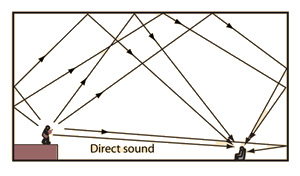
Good projection of sound to the rear of the enclosure.
声音良好地投射到隔音箱后方 | Desirable acoustic properties of the auditorium can be contributed by its architecture. The desired properties at left are correlated with the measurable parameters at right.
观众厅的 desirable 声学特性可以由其建筑结构贡献。左侧的期望特性与右侧的可测量参数相关联。 |
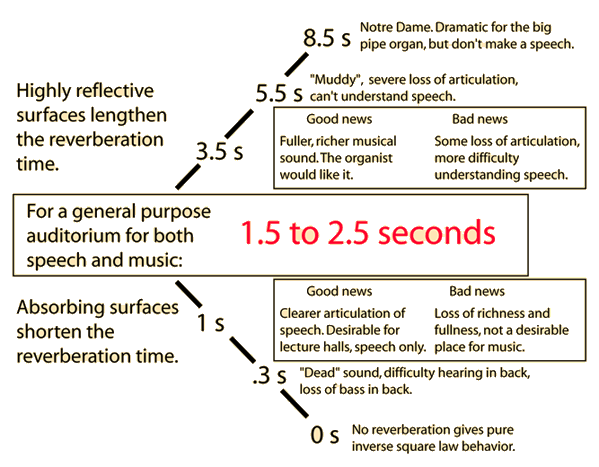
Long enough reverberation time.
足够长的混响时间 |
|
Good clarity and articulation
清晰的表达和清晰度 |
Reverberation time not too long.
混响时间不太长。 | |
|
Good balance of low and high frequencies.
低频和高频之间的良好平衡 |
Reverb time for low freq. longer than for highs.
低频的回声时间比高频长 | |
|
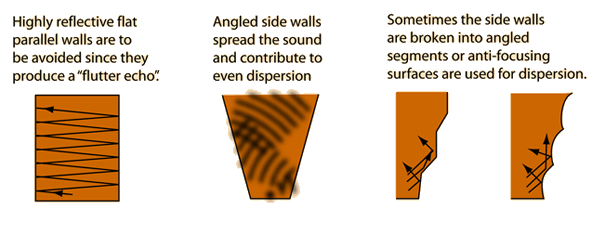
Even dispersion of sound. Absence of annoying echoes.
声音的均匀散射。没有令人烦恼的回声。 |
No large reflective surfaces or focusing of sound.
没有大的反射面或声波的聚焦。 | |
|
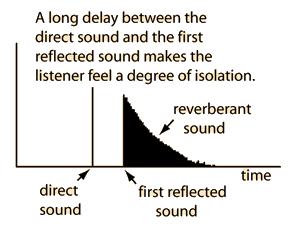
A feeling of "intimacy" or "presence".
一种‘亲密感’或‘存在感’。 |
Short delay between direct and first reflected sound.
直达声与第一反射声之间的短延迟 |
The above comparison of general description and measurable parameter was inspired by a review article about the opening of the Minneapolis Orchestra Hall published in Time magazine on November 4, 1974.
上述关于总体描述和可测量参数的比较受到一篇发表于1974年11月4日《时间》杂志上关于明尼苏达交响乐团大厅开放的评论文章的启发。
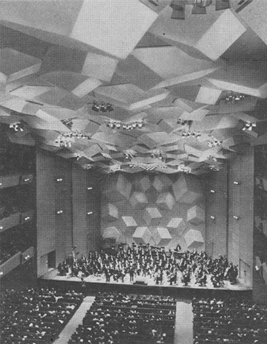 | The article gave this general description: "A capacity crowd of 2573 discovered that the new $10 million Orchestra Hall is a winner, with truly superior sound. The term for the way in which a stage projects sound into an auditorium is 'throw'. Orchestra Hall has a throw that even Tom Seaver might envy. ... the new hall also has remarkable even dispersion of sound,... admirable balance and clarity, a striding bass and an exciting musical presence unsurpassed perhaps by any concert hall in the world. ..At times the volume of the orchestra approached the painful - clearly the result of the conductor's understandable desire to show off the hall's dynamic range."
这篇文章给出了这样的总体描述:"2573名观众发现新的1000万美元音乐厅是一个赢家,其声音确实非常出色。舞台将声音投射到音乐厅中的方式称为‘投射’。音乐厅的投射效果甚至让汤姆·塞弗可能都羡慕。……新音乐厅还具有令人印象深刻的声音均匀分布,可贵的平衡和清晰度,强劲的低音和令人兴奋的音乐表现力,也许在世界上任何音乐厅中都是无与伦比的。……有时乐团的音量接近痛苦的水平——显然这是指挥家出于 understandable 的愿望来展示音乐厅动态范围的结果。" |
Auditorium acoustics
索引 声学礼堂
| HyperPhysics***** Sound
HyperPhysics ***** 声音 | R Nave |
返回