Thyroid and Parathyroid
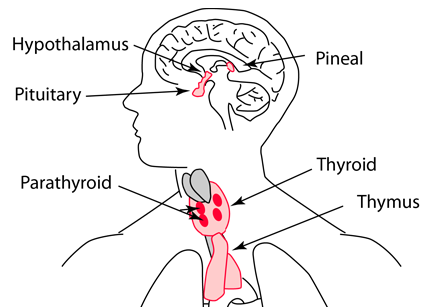 | The thyroid is a gland in the endocrine system. It consists of two lobes in the front of the neck. It secretes three hormones. Two of these are called thyroid hormones with further designation triiodothyronine (T3) and thyroxine (T4). These two hormones influence the metabolic rate and protein synthesis, and the growth and development of children. The third hormone, calcitonin, plays a role in calcium homeostasis. 甲状腺是内分泌系统中的一个腺体。它位于颈部前方,由两个叶组成。它分泌三种激素。其中两种称为甲状腺激素,具体为三碘甲状腺原氨酸(T3)和甲状腺素(T4)。这两种激素影响代谢率和蛋白质合成,以及儿童的生长和发育。第三种激素是降钙素,它在钙平衡中起作用。 |
The release of the thyroid hormones is stimulated by the thyroid-stimulating hormone (TSH) produced by the anterior lobe of the pituitary gland. The thyroid gland's release of thyroxine influences most cells in the body, increasing their metabolic rate and stimulating the synthesis of enzymes that break down glucose and provide energy. It has been observed that exposure to cold greatly influences thyroid hormone production, so it may be that there is a connection to the hypothalamus which controls the temperature regulation of the body.
The level of the thyroid hormone is critical to early human development. Undersecretion of the thyroid hormone early in life can lead to cretinism, a condition characterized by mental retardation and dwarfism. Fortunately, supplements of thyroxine can prevent such damage if detected early.
A control loop involving the thyroid, the pituitary and the hypothalamus acts to finely tune the level of thyroxine in the body. A releasing hormone from the hypothalamus stimulates the anterior lobe of the pituitary to produce the thyroid-stimulating hormone (TSH), which in turn stimulates the thyroid to release thyroxine. But a high level of thyroxine in the bloodstream inhibits the secretion of the releasing hormone, forming a negative feedback loop to keep the thyroxine level within narrow limits.
Goiter, a condition leading to great enlargement of the thyroid and producing a large bulge on the throat, was once common in some parts of the United States. It was caused by a deficiency of iodine in the diet leading to very low production rate for thyroxine. The body responded with a rapid proliferations of thyroxine-producing cells. The problem was largely corrected by the widespread use of iodized salt.
Humans usually have four small parathyroid glands located on the back of the thyroid gland. These glands secrete parathyroid hormone (parathormone) in response to a low blood level of calcium. Acting in concert with calcitonin, this hormone helps keep the calcium level in the blood and other body fluids within narrow limits. Together, they regulate calcium absorption and release by the bones. In response to low blood levels of calcium, the parathormone causes release of calcium from the bones, which serve as a reservoir of calcium. The parathyroids increase in size in pregnant and lactating women, releasing more parathormone to help them meet the increased demands for calcium. If blood calcium levels become too high, more calcitonin release inhibits the release of calcium from the bones.
| Thyroid Gland Wiki
甲状腺腺体维基 |
| Parathyroid Gland Wiki
甲状旁腺百科 |
| This material is part of a brief overview of the topics studied in biology with the intent to highlight the connections to basic ideas in physics and physical science.
这部分内容是对生物学中研究主题的简要概述,旨在突出其与物理学和物理科学基本概念的联系。 |
Reference
Audesirk & Audesirk
Ch 32
Thibodeau & Patton
Ch 16
| HyperPhysics***** Biology
HyperPhysics ***** 生物学 | R Nave |