c as Speed Limit
c 作为速度极限
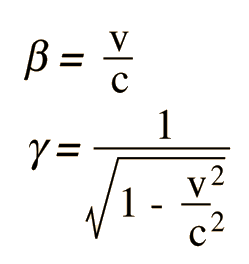
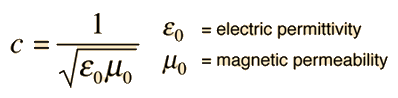
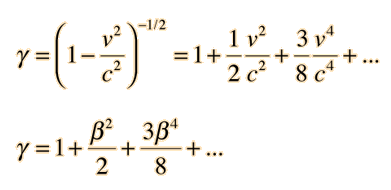
The speed of light c is said to be the speed limit of the universe because nothing can be accelerated to the speed of light with respect to you. A common way of describing this situation is to say that as an object approaches the speed of light, its mass increases and more force must be exerted to produce a given acceleration. There are difficulties with the "changing mass" perspective, and it is generally preferrable to say that the relativistic momentum and relativistic energy approach infinity at the speed of light. Since the net applied force is equal to the rate of change of momentum and the work done is equal to the change in energy, it would take an infinite time and an infinite amount of work to accelerate an object to the speed of light. (Sorry, Captain Kirk. We can't give you warp speed!)
光速 c 被认为是宇宙中的速度极限,因为没有任何东西可以以光速相对于你加速。描述这种情况的一种常见方式是说,当一个物体接近光速时,其质量会增加,要产生给定的加速度就需要施加更大的力。采用“质量变化”的观点存在困难,因此通常更倾向于说,相对论动量和相对论能量在光速时会趋于无穷大。由于净作用力等于动量的变化率,而所做的功等于能量的变化,因此将物体加速到光速将需要无限的时间和无限的功。(对不起,柯克舰长。我们不能给你超光速的能力!)
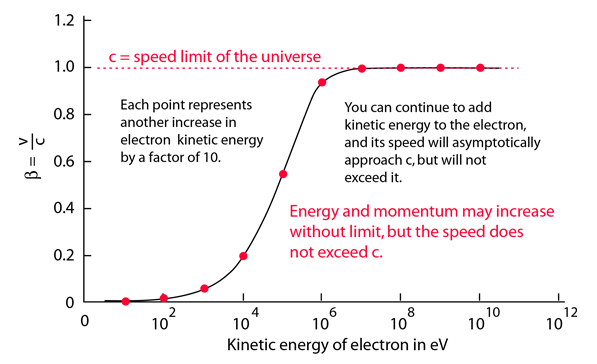
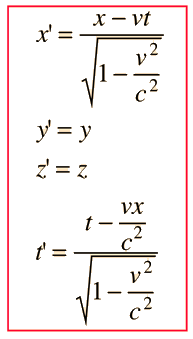
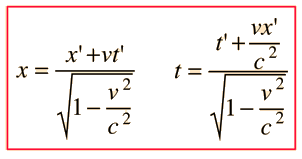
A common resistance to the speed limit is to suggest that you just accelerate two different objects to more than half of the speed of light and point them toward each other, giving a relative speed greater than c. But that doesn't work! Time and space are interwoven in such a way that no one observer ever sees another object moving toward them at greater than c. The Einstein velocity addition deals with the transformation of velocities, always yielding a relative velocity less than c. It doesn't agree with your common sense, but it appears to be the way the universe works.
对速度限制的一个常见反对意见是建议你将两个不同的物体加速到光速的一半以上,并将它们相互指向,从而产生大于光速的相对速度。但这行不通!时间与空间交织在一起,使得没有任何观察者会看到另一个物体以超过光速的速度向他们靠近。爱因斯坦的相对速度加法处理速度的变换,总是得出一个小于光速的相对速度。这与常识不符,但似乎就是宇宙运作的方式。
|