What conditions were necessary to form our Sun?
 |
The Sun is a typical medium-sized star, positioned about midway on the main sequence of the Hertzsprung-Russell diagram. But as the source of energy for life on Earth, there is a rather narrow window of characteristics it had to have. The solar spectrum peaks at photon energies which facilitate the electron transfers essential to life chemistry. And those energies are appropriate for transmission through Earth's atmosphere. 太阳是一颗典型的中等大小的恒星,位于赫罗图- Russell 图的主序带中间位置。但作为地球生命能量的来源,它必须具备相当狭窄的特性。太阳光谱在光子能量上达到峰值,这些能量有利于生命化学中必要的电子转移。而这些能量适合通过地球大气层传输。 |
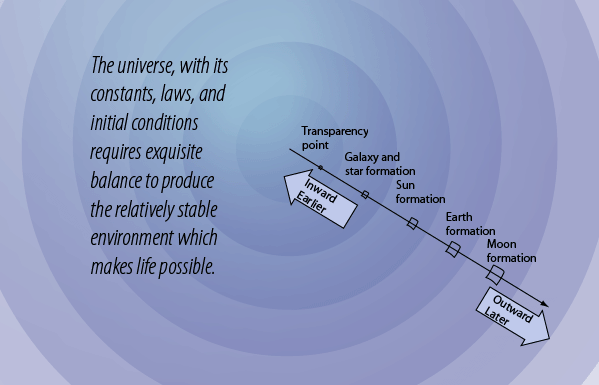
In order to form rocky planets like the Earth, the Sun had to have a relatively high content of heavy elements. To astronomers, heavy elements are anything heavier than helium and are commonly lumped under the term "metals". The "metallicity" of the Sun is relatively high, making possible the formation of the four inner planets. This places constraints upon the time of formation of the Sun since the heavy element formation takes place in other stars. These heavy elements, left behind by several generations of earlier stars, must have been a part of the hydrogen cloud from which the Sun and solar system formed.
| How do you form a habitable planet?
如何形成适宜居住的行星? |
HyperPhysics  | R Nave |