Mitochondria
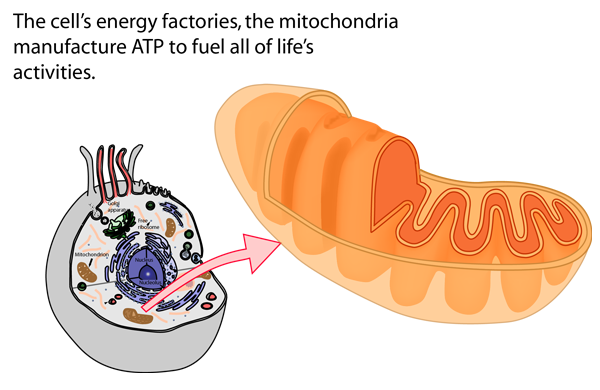
| Mitochondrion structure
线粒体结构 |
Mitochondria are the energy factories of the cells. The energy currency for the work that animals must do is the energy-rich molecule adenosine triphosphate (ATP). The ATP is produced in the mitochondria using energy stored in food. Just as the chloroplasts in plants act as sugar factories for the supply of ordered molecules to the plant, the mitochondria in animals and plants act to produce the ordered ATP molecules as the energy supply for the processes of life.
A typical animal cell will have on the order of 1000 to 2000 mitochondria. So the cell will have a lot of structures that are capable of producing a high amount of available energy. This ATP production by the mitochondria is done by the process of respiration, which in essence is the use of oxygen in a process which generates energy. This is a very efficient process for using food energy to make ATP. One of the benefits of "aerobic exercise" is that it improves your body's ability to make ATP rapidly using the respiration process.
All living cells above the level of microbes have mitochondria. Hair cells and outer skin cells are dead cells and no longer actively producing ATP, but all cells have the same structure. Some cells have more mitochondria than others. Muscle cells have many mitochondria, which allows them to respond quickly to the need for doing work. Mitochondria occupy 15 to 20 percent of mammalian liver cells according to Karp.
| Order and disorder in biological systems.
生物系统中的有序与无序。 |
| Energy cycle in living things
生物体的能量循环 |
Second law concepts
Reference
Karp
Ch 5
| HyperPhysics***** Biology
HyperPhysics ***** 生物学 | R Nave |