Energy Cycle in Living Things
A fascinating parallel between plant and animal life is in the use of tiny energy factories within the cells to handle the energy transformation processes necessary for life. Both animal and plant cells contain mitochondria and plants have the additional energy factories called chloroplasts. The chloroplasts collect energy from the sun and use carbon dioxide and water in the process called photosynthesis to produce sugars. Animals can make use of the sugars provided by the plants in their own cellular energy factories, the mitochondria. These energy factories produce a versatile energy currency in the form of adenosine triphosphate (ATP). This high-energy molecule stores the energy we need to do just about everything we do.
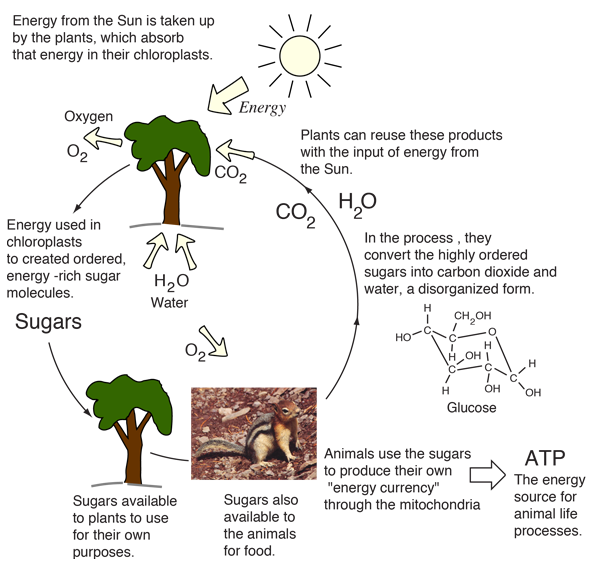
The energy cycle for life is fueled by the Sun. The main end product for plants and animals is the production of highly energetic molecules like ATP . These molecules store enough immediately available energy to allow plants and animals to do their necessary work.
| The functional work (energy transformations) of plants and animals.
植物和动物的功能性工作(能量转化) |
| Order and disorder in biological systems.
生物系统中的有序与无序。 |
Second law concepts
| HyperPhysics***** Biology
HyperPhysics ***** 生物学 | R Nave |