Pigments for Photosynthesis光合作用中的色素
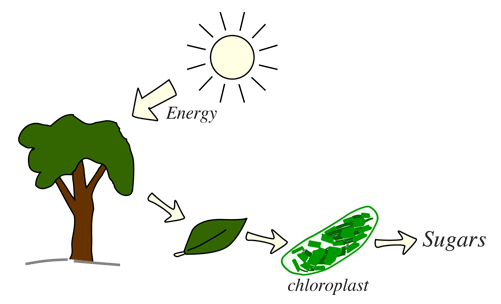
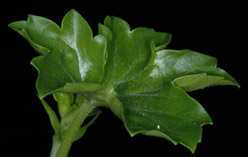
Photosynthesis in plants is dependent upon capturing light energy in the pigment chlorophyll, and in particular chlorophyll a. This chlorophyll resides mostly in the chloroplasts and gives leaves their green color. The range of light absorption in leaves is extended by some accessory pigments such as the carotenoids, but does not cover the entire visible range - that would make the leaves black! 植物的光合作用依赖于在叶绿素(特别是叶绿素a)中捕获光能。这种叶绿素主要存在于叶绿体中,使叶子呈现绿色。叶子的光吸收范围由一些辅助色素如类胡萝卜素扩展,但并不覆盖整个可见光范围——如果覆盖的话,叶子将会是黑色的!
Some plants and plantlike organisms have developed other pigments to compensate for low light or poor use of light. Cyanobacteria and red algae have phycocyanin and allophycocyanin as accessory pigments to absorbe orange light. They also have a red pigment called phycoerythrin that absorbs green light and extends the range of photosynthesis. The red pigment lycopene is found in vegetables. Some red algae are in fact nearly black, so that increases their photosynthetic efficiency. Brown algae have the pigment fucoxanthin in addition to chlorophyll to widen their absorption range. These red and brown algae grow to depths around 270 meters where the light is less than 1% of surface light. 一些植物和类似植物的生物已经发展出其他色素以补偿低光或光利用效率低的情况。蓝绿藻和红藻具有光合色素辅色素——藻蓝蛋白和藻黄蛋白,用于吸收橙色光。它们还有一种红色色素称为藻红蛋白,能吸收绿色光并扩展光合作用的光谱范围。红色色素胡萝卜素存在于蔬菜中。事实上,一些红藻几乎呈黑色,这增加了它们的光合作用效率。褐藻除了叶绿素外,还含有藻黄素,以扩展其光吸收范围。这些红藻和褐藻可以生长到约270米的深度,那里光线强度仅为表面的1%。
But the most advanced plants are the land plants, which have the least advanced system for gathering light! 但最先进的植物是陆生植物,它们的光收集系统最为原始!
|
Index Photosynthesis Concepts Reference Moore, et al. Ch 7 索引 光合作用概念 参考 Moore 等人 第7章 | ||
|
Go Back
返回 |
Chlorophyll叶绿素
|
Index Photosynthesis Concepts Reference Moore, et al. Ch 7 索引 光合作用概念 参考 Moore 等人 第7章 | ||||
|
Go Back
返回 |
Accessory Pigments for Photosynthesis光合作用辅助色素
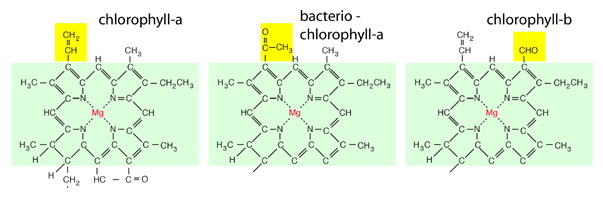
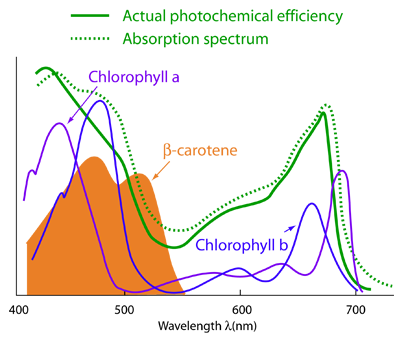
Chlorophylla-a is the primary pigment for photosynthesis in plants, but the range of light absorption is extended by chlorophyll-b, beta-carotene and other accessory pigments. ![]() The variations of chlorophyll-b and the bacterial version are indicated above. 上述所示的是叶绿素b和细菌版本的变化
The range of light absorption is extended somewhat toward the middle of the visible spectrum by the content of carotenoids in leaves. 叶中的类胡萝卜素含量使光吸收范围在可见光谱的中间区域有所扩展。
叶绿素a是植物光合作用的主要色素,但通过叶绿素b、β-胡萝卜素等辅助色素扩展了光吸收范围。 |
Index Photosynthesis Concepts Reference Moore, et al. Ch 7 索引 光合作用概念 参考 Moore 等人 第7章 | ||
|
Go Back
返回 |
Carotenoids类胡萝卜素
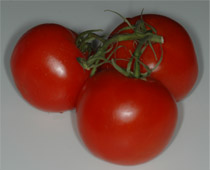
The colors of the carotenoids are familiar as the fall colors of leaves. As the leaves lose their chlorophyll, the more persistent carotenoids give the pleasant reds, yellows and oranges of the autumn foliage. Beta-carotene is the most important of the carotenoids. Lycopene, the color of tomatoes, is also a carotenoid. 胡萝卜素的颜色 familiar 作为树叶的秋季颜色。当树叶失去叶绿素时,更持久的胡萝卜素呈现出秋天树叶令人愉快的红色、黄色和橙色。β-胡萝卜素是最重要的胡萝卜素。番茄的颜色番茄红素也是一种胡萝卜素。
![]()
|
Index Photosynthesis Concepts Reference Moore, et al. Ch 7 索引 光合作用概念 参考 Moore 等人 第7章 | ||
|
Go Back
返回 |
Beta Caroteneβ-胡萝卜素
|
Index Photosynthesis Concepts Reference Moore, et al. Ch 7 索引 光合作用概念 参考 Moore 等人 第7章 | ||||||
|
Go Back
返回 |
Lycopene胡萝卜素
|
Index Photosynthesis Concepts Reference Moore, et al. Ch 7 索引 光合作用概念 参考 Moore 等人 第7章 | |||
|
Go Back
返回 |