Ribosomes
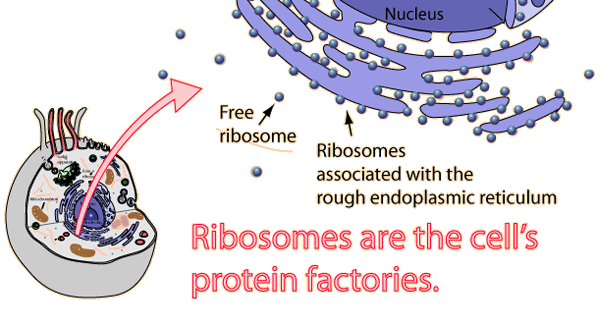
Within cells are small, dense structures known as ribosomes that catalyse the assembly of protein chains. The ribosome accomplishes the reading of the messenger RNAs and the binding of amino acids to the transfer RNAs to build up the protein structures. This process is called translation, a word that seems appropriate since it translates the four-character alphabet of the bases used in the genetic code to proteins built in the twenty-character alphabet of amino acids.
The ribosome is a complex of over 50 proteins plus its own complement of RNA, often denoted rRNA.
There are free ribosomes that are suspended in the cytoplasm of the cell, but many of them are attached to the rough endoplasmic reticulum associated with the nuclear envelope of the cell.
The ribosomes in prokaryotic cells are free floating structures, there being no nuclei in such cells. 原核细胞中的核糖体是游离的结构,这类细胞中没有细胞核。 |  |
"If genomic DNA is the cell's planning authority, then the ribosome is its factory, churning out the proteins of life. It's a huge complex of protein and RNA with a practical and life-affirming purpose - catalyzing protein synthesis. Bacterial cells typically contain tens of thousands of ribosomes, and eukaryotic cells can contain hundreds of thousands or even a few million of them" (Borman)
Reference
Hickman, et al.
Ch 4
Borman, Stu
| HyperPhysics***** Biology
HyperPhysics ***** 生物学 | R Nave |