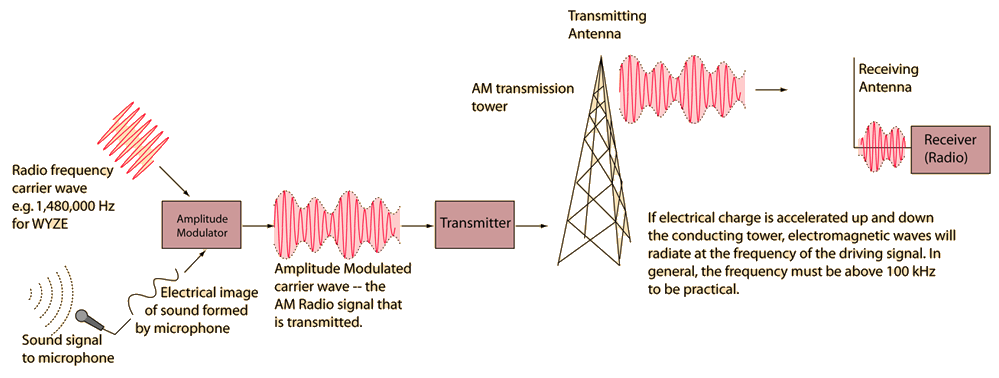
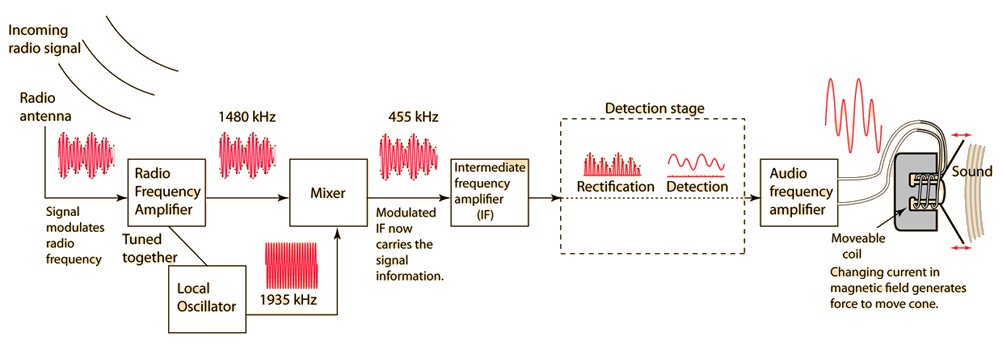
| This is a sketch of some of the components involved in an AM radio receiver. A typical AM radio can be tuned to receive the output of any AM radio transmitter which is close enough to provide adequate signal strength.
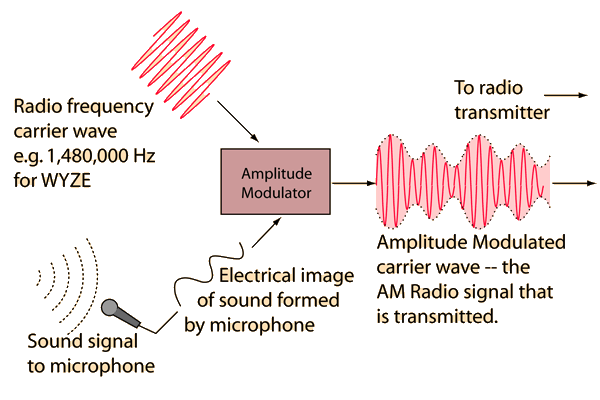
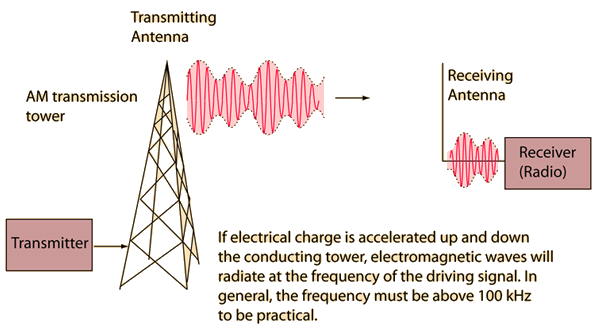
这是一幅AM收音机接收机中一些关键组件的示意图。典型的AM收音机可以调谐以接收任何足够接近的AM收音机发射机的输出,以提供足够的信号强度。 The information signal as a low frequency 'audio" signal is superimposed upon a much higher radio frequency 'carrier' which can be transmitted and then received by the radio antenna. However, the antenna will receive the signal from all AM radio transmitters in the area simultaneously, and you would usually want to listen to just one. Therefore in the development of practical radio, it was necessary to develop a way to tune precisely to one carrier and reject all the others. Each radio station is assigned a precise carrier frequency and it must keep its transmitted information within +/- 5 kHz of that carrier frequency.
作为低频‘音频’信号的信息信号被叠加在远高于无线电频率的‘载波’上,该载波可以被传输并由无线电天线接收。然而,天线会同时接收区域内所有AM无线电发射机发出的信号,你通常只想收听其中一个。因此,在实际无线电技术的发展中,必须开发出一种能够精确调谐到某一载波并抑制其他所有信号的方法。每个无线电电台都会被分配一个精确的载波频率,并且其发射的信息必须保持在该载波频率±5kHz范围内。 The scheme developed to make AM radio a practical means for mass communication was called "heterodyning". It involves using a local oscillator in the receiver that tunes along with the input radio frequency amplifier so that their difference or beat frequency remains the same. This beat frequency is called the "intermediate frequency" or IF, and for the United States that beat frequency is 455 kHz. After initial amplification, the radio frequency (RF) signal is mixed with the local oscillator frequency to produce the IF, and all the subsequent stages are tuned to 455 kHz. The IF carries any AM signal that was on the original RF. This process has the practical advantages of allowing a high quality tuned RF amplifier on the front end to tune to the different stations, and then a high quality single amplifier and detector chain tuned to the single IF of 455 kHz.
为了使AM广播成为一种实用的大众传播手段而开发的方案被称为'混频'。它涉及在接收机中使用一个与输入射频放大器调谐的本地振荡器,使得它们的差频或拍频保持不变。这个拍频被称为'中频'或IF,对于美国来说,这个拍频是455 kHz。在初始放大之后,射频(RF)信号与本地振荡器频率混合以产生IF,且所有后续阶段都调谐到455 kHz。IF承载了原始RF上的任何AM信号。这个过程具有实际优势,即允许一个高质量的射频放大器在前端调谐到不同的电台,然后一个高质量的单级放大器和检波器链调谐到单一的455 kHz中频。 |