Igneous Rock Composition岩浆岩的成分
Igneous rocks are commonly classified by their composition and texture. Most are composed of the eight most abundant elements in the Earth's crust. Because of the dominance of oxygen and silicon in the crust, igneous rocks are mostly made up of silicate minerals. These silicates can be generally divided into light and dark silicates. The dark silicates are also called ferromagnesian because of the presence of iron and magnesium in them. They include olivine, pyroxene, amphibole and biotite. The light-colored silicates include quartz, muscovite and feldspar. 岩浆岩通常根据其成分和结构进行分类。大多数岩浆岩由地壳中八种最丰富的元素组成。由于地壳中氧和硅的主导地位,岩浆岩大多由硅酸盐矿物组成。这些硅酸盐可以一般分为轻硅酸盐和重硅酸盐。重硅酸盐也被称为铁镁硅酸盐,因为其中含有铁和镁。它们包括橄榄石、辉石、角闪石和黑云母。轻色硅酸盐包括石英、白云母和长石。
Solidification from magma produces great diversity in the mineral compositions which make up the rocks. There are general catagories which are keyed to the amounts of light and dark silicates in the rocks. At the light-colored extreme are rocks made up mainly of quartz and the feldspars, with about 70% silica. Such rocks are called granitic rock. Rocks which contain large amounts of the ferromagnesian dark matter and about 50% silica are said to have basaltic composition. Some organization was brought to the continuous variation between these extremes by the Bowen reactions. This model of the process of solidification from magma pictures the processes which causes the composition of the magma and the subsequent rocks to change. 从岩浆凝固产生的岩石具有很大的矿物组成多样性。这些岩石的分类依据的是岩石中浅色和深色硅酸盐的含量。在浅色端,主要由石英和长石组成的岩石,含约70%的二氧化硅,这类岩石称为花岗岩。含有大量铁镁质深色物质且含约50%二氧化硅的岩石被称为基性岩。 Bowen反应将这些极端之间的连续变化组织了起来。这种从岩浆凝固过程的模型描绘了导致岩浆及后续岩石组成变化的过程。
|
Index Igneous rock concepts Reference Lutgens & Tarbuck Ch 3 索引 火成岩概念 参考 Lutgens & Tarbuck 第3章 | ||
|
Go Back
返回 |
Igneous Rock Texture火成岩结构
Igneous rocks are commonly classified by their composition and texture. Texture is the term applied to the overall appearance of a rock based on the size, shape, and arrangement of the interlocking mineral crystals which form it. The table below summarizes the common classifications. 岩浆岩通常根据其成分和结构进行分类。结构是指根据构成岩石的矿物晶体的大小、形状和排列方式所呈现的整体外观来描述的。下表总结了常见的分类。
|
Index Igneous rock concepts Reference Lutgens & Tarbuck Ch 3 索引 火成岩概念 参考 Lutgens & Tarbuck 第3章 | ||||||||||
|
Go Back
返回 |
Elements Abundant in Igneous Rock火成岩中丰富的元素
Eight elements make up about 98% by weight of most magmas from which igneous rocks are made. Click on any element for further details. 大多数岩浆中,约98%的重量由八种元素组成。点击任意元素以获取更多详情。
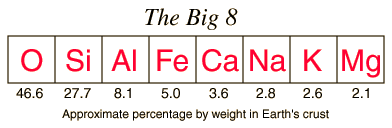
![]() The dominance of oxygen and silicon in the Earth's crust gaurantees that most igneous rocks are made up of silicate minerals. The main differences in the composition of igneous rocks are the variations in the other six elements. 地球表面氧和硅的主导地位保证了大多数岩浆岩由硅酸盐矿物组成。岩浆岩的主要差异在于其他六个元素的含量变化。
Beyond the "big 8", manganese and titanium are present in small concentrations in magma and therefore appear in a number of minerals. 除了“八大矿物”之外,岩浆中还含有少量的锰和钛,因此它们出现在多种矿物中。
|
Index Igneous rock concepts Reference Lutgens & Tarbuck Ch 3 索引 火成岩概念 参考 Lutgens & Tarbuck 第3章 | ||
|
Go Back
返回 |