Refraction and the Eye
折射与眼睛
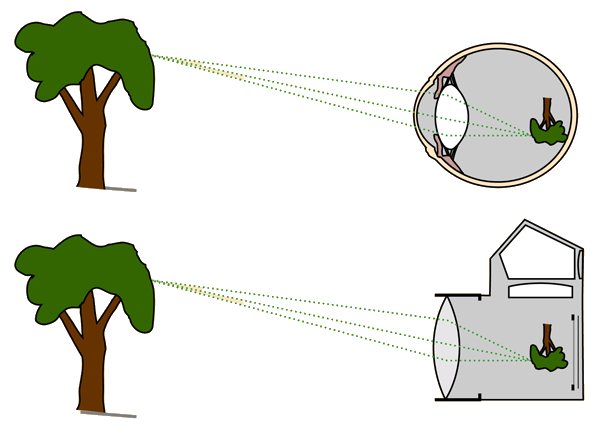
Refraction is the phenomenon which makes image formation possible by the eye as well as by cameras and other systems of lenses.
折射是使眼睛、相机及其他透镜系统能够形成影像的现象。
Most of that refraction in the eye takes place at the first surface, since the transition from the air into the cornea is the largest change in index of refraction which the light experiences. About 80% of the refraction occurs in the cornea and about 20% in the inner crystalline lens.
眼睛中大部分的折射发生在第一个表面,因为从空气进入角膜的折射率变化是光所经历的最大变化。大约80%的折射发生在角膜,而约20%发生在晶状体内。
While the inner lens is the smaller portion of the refraction, it is the total source of the ability to accommodate the focus of the eye for the viewing of close objects. For the normal eye, the inner lens can change the total focal length of the eye by 7-8%.
尽管内透镜是折射的较小部分,但它是眼睛调节聚焦以观察近处物体的能力的总来源。对于正常眼睛,内透镜可以改变眼睛的总焦距为7-8%。
Common eye defects are often called "refractive errors" and they can usually be corrected by relatively simple compensating lenses.
常见的视力缺陷通常被称为“屈光误差”,通常可以通过相对简单的补偿透镜进行矫正。
|