The Liver
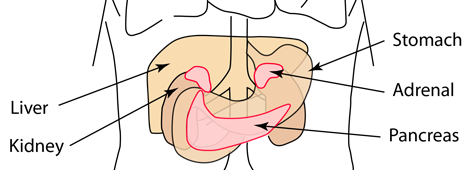 | The 人类的消化系统包括胃、胰腺和胆囊、小肠以及肝脏。 digestive system of humans involves the stomach, the pancreas and gall bladder, the small intestine and the liver.
|
"The liver is perhaps the most versatile organ in the body. It's many functions include storage of fats and carbohydrates for energy, regulation of blood glucose levels, synthesis of blood proteins, storage of iron and certain vitamins, conversion of toxic ammonia (released by the breakdown of amino acids) into urea, and detoxification of other harmful substances such as nicotine and alcohol." (Audesirk & Audesirk) A major function is to filter the blood coming from the digestive tract, before passing it to the rest of the body. It metabolizes drugs. The liver secretes bile, which is stored in the gallbladder and released into the small intestine through the bile duct. The liver, gallbladder, and pancreas (in endocrine system) work together with the intestines to digest, absorb, and process food.
Liver cells detoxify various substances
The liver carries the burden of filtering the blood that comes from the intestines which may include numerous poisonous substances. Alcohol and acetaminophin are often mentioned drugs that are detoxified by the liver through a series of chemical reactions. Dissolved toxins are absorbed into the hepatic cells on the walls of structures in the lobes of the liver.
The liver produces bile, which is essential to the digestive process.
The liver produces about a pint of bile per day to aid in the digestive process. This bile is stored in the gallbladder for the time when it is needed for digestion. Bile consists of bile salts, bile pigments and cholesterol. The bile salts formed in the liver from cholesterol are the essential parts, aiding in the absorption of fats. Most of these bile salts are also absorbed and recycled in the liver to again be a part of the supplied bile.
The bile also serves as a pathway for the elimination of the breakdown products of red blood cells from the spleen. When aged red blood cells are destroyed, the heme portion of them is converted into bilirubin and transported by the blood to the liver. Liver cells extract the bilirubin and excrete it into the bile.
Liver cells carry out important tasks in the metabolism of all three kinds of foods - proteins, fats, and carbohydrates.
When glucose levels are high, as in the period following a meal, the glucose in the blood flowing to the liver will form glycogen through a process called glycogenesis. Glycogen is stored in the liver and in skeletal muscles as an energy reserve. The liver can then break down this glycogen as needed for production of glucose (glycogenolysis).
In the metabolism of lipids, the liver produces lipoproteins in the form of triglycerides, cholesterol, and phospholipids with proteins. From this process, circulating lipoproteins of different density circulate in the blood and can be measured in diagnostic tests. Represented by their abbreviations VLDL(very low density lipoprotein), LDL(low density lipoprotein), and HDL(high density lipoprotein), they are related to the risk of coronary artery disease (high LDL). High values of HDL (the "good" lipoproteins) are associated with lower risk and may be achieved by regular exercise.
The liver is active in the production (anabolism) of plasma proteins for the blood. It is also home to the major process of handling toxic ammonia from amino acid metabolism in the urea cycle.
The liver receives lactate from cells undergoing anaerobic metabolism and converts it to glucose in the Cori cycle.
Cells which have exhausted their oxygen supply produce lactate by the fermentation process. Since this lactate cannot be used by the cells, it is placed in the bloodstream and carried to the liver where it is used in the Cori cycle to produce glucose to place back in the blood supply.
The liver is a storage location for iron and for vitamins A, B12, and D.
Lobes of liver tissue have radiating plates of hepatic cells where vitamins and other nutrients may be stored.
The liver produces important plasma proteins and serves as a site for blood cell formation during fetal development.
The liver can synthesize nine of the twenty amino acids needed for human metabolism. Ten of the remaining amino acids are called "essential amino acids" since the body cannot synthesize them, requiring us to obtain them from our diet.
| This material is part of a brief overview of the topics studied in biology with the intent to highlight the connections to basic ideas in physics and physical science.
这部分内容是对生物学中研究主题的简要概述,旨在突出其与物理学和物理科学基本概念的联系。 |
Reference
Audesirk & Audesirk
Ch 29
Thibodeau & Patton
Ch2,4, 25, 27
| HyperPhysics***** Biology
HyperPhysics ***** 生物学 | R Nave |