Bilingual edition: English is preserved and Chinese follows each unit. Terminology uses the confirmed v20260916 glossary; automated semantic review remains traceable.
中英双语版:英文原文完整保留,中文紧随对应单元;术语采用 v20260916 确认表,自动语义审校结果可追溯。

Forming the Vowel Sounds

元音音素的形成

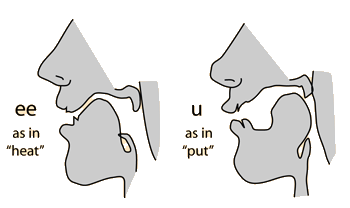
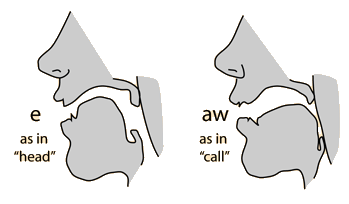
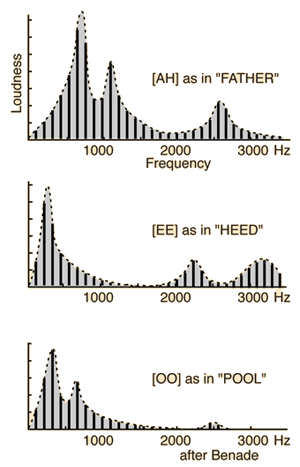
The vocal resonances are altered by the articulators to form distinguishable vowel sounds. The peaks in the vowel spectra are called vocal formants. Note the prominent role of the tongue in this process. The jaw position and lips also play a major part.
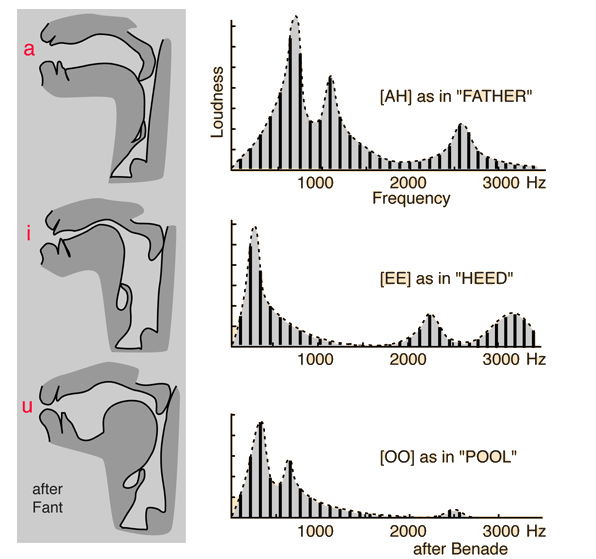
声带共振被发音器官所改变,从而形成可区分的元音声音。元音频谱中的峰值称为声学共振峰。请注意舌头在此过程中的重要作用。下颌位置和嘴唇也起着重要作用。

The sketches at left above are adapted from Gunnar Fant's "Acoustic theory of speech production" and are reportedly sketches taken from x-rays of the head during the production of these sounds. These are the vowels classified as IPA [a], [i], and [u] and roughly correlate with the vowels represented in the spectra from Benade. The emphasis should be on "roughly" since I don't know how close the correlation is. The intent here is to illustrate the role of the articulators and to point to the fact that their action has a major influence on the harmonic content of the voiced sounds. The normal ear is able to clearly distinguish those differences.

左上方的草图改编自Gunnar Fant的《语音生成的声学理论》,据说这些草图是发音过程中头部X光影像的绘制。这些是被分类为IPA [a]、[i]和[u]的元音,大致与Benade的频谱中表示的元音相对应。应强调“大致”这一点,因为我并不知道这种相关性有多紧密。此处的意图是说明发音器官的作用,并指出它们的活动对 voiced 声音的谐波内容有重大影响。正常人耳能够清楚地区分这些差异。
Further discussion of Fant's presentation
关于Fant展示的进一步讨论
Other examples
其他例子
Index

Voice concepts

Musical instruments

References
Sundberg
Sci. Amer.

Benade
Ch 19

Fant
索引 声学概念 音乐乐器 参考文献 Sundberg 科学美国人 Benade 第19章 Fant
 
HyperPhysics***** Sound
HyperPhysics ***** 声音
R Nave
Go Back
返回


After Denes & Pinson, The Speech Chain
Denes & Pinson之后的语音链
Formation of vowel sounds
元音音素的形成

Examples of the changing shapes of the vocal mechanism in a process called articulation as it forms different vowel sounds.

在称为‘发音’的过程中,发声机制的形状发生变化,形成不同的元音声音。
Vowel spectra
元音频谱
Index

Voice concepts

Musical instruments
索引 声学概念 音乐乐器
 
HyperPhysics***** Sound
HyperPhysics ***** 声音
R Nave
Go Back
返回


Vocal Formants

语音共振峰

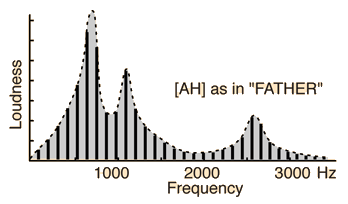
The term formant refers to peaks in the harmonic spectrum of a complex sound. They are usually associated with, but not necessarily equal to some sort of resonance of the source. Because of their resonant origin, they tend to stay essentially the same when the frequency of the fundamental is changed. Formants in the sound of the human voice are particularly important because they are essential components in the intelligibility of speech. For example, the distinguishability of the vowel sounds can be attributed to the differences in their first three formant frequencies. Producing different vowel sounds amounts to retuning these formants within a general range of frequencies. Benade suggests the following ranges of frequencies for the formants of a male voice:

1st formant 150-850 Hz
2nd formant 500-2500 Hz
3rd formant 1500-3500 Hz
4th formant 2500-4800 Hz
第一共振峰 150-850 Hz 第二共振峰 500-2500 Hz 第三共振峰 1500-3500 Hz 第四共振峰 2500-4800 Hz

The process of articulation determines the frequencies of the vocal formants. Sundberg has identified portions of the vocal anatomy which he associates with the formant frequencies. The jaw opening, which constricts the vocal tract toward the glottal end and expands it toward the lip end, is the deciding factor for the first formant. This formant frequency rises as the jaw is opened wider. The second formant is most sensitive to the shape of the body of the tongue, and the third formant is most sensitive to the tip of the tongue.

发音过程决定了声道共振峰的频率。Sundberg已经确定了与共振峰频率相关的声道解剖结构部分。下颌开口会使得声道向声门端收缩,向唇端扩展,这是第一个共振峰的关键因素。当下颌开口越大,第一个共振峰的频率越高。第二个共振峰最敏感于舌体的形状,第三个共振峰最敏感于舌尖的形状。
Examples
示例
‘共振峰’指的是复杂声音的谐波谱中的峰值。它们通常与某种共振有关,但并不一定等于该共振。由于其共振起源,当基频频率变化时,它们基本上保持不变。人类语音中的共振峰特别重要,因为它们是语音可懂性的关键组成部分。例如,元音声音的可区分性可以归因于其前三个共振峰频率的差异。产生不同的元音声音相当于在一定频率范围内重新调节这些共振峰。Benade建议男性语音的共振峰频率范围为:
Index

Voice concepts

Musical instruments

Reference
Benade
Ch 19

Sundberg

Wolfe, Formant
索引、声音概念、音乐乐器、参考、Benade 第19章、Sundberg Wolfe, 频率
 
HyperPhysics***** Sound
HyperPhysics ***** 声音
R Nave
Go Back
返回


Vowel Formants

元音共振峰

The recognizable quality of the sound of different vowel sounds is attributed to the existence of formant regions: frequency ranges where the sound is enhanced by the cavity resonances of the human vocal mechanism. The plots at left show that the formant frequencies are distinctly different for the three vowel sounds indicated. The inner ear acts as an analyzer and can clearly distinguish these vowel sounds. The formants are quite similar for the same vowel at different frequencies, enabling it to be recognized regardless of the pitch.

不同元音声音的可辨识性归因于共振腔的共振频率范围,即所谓的共振区:这些频率范围内的声音因人体发声机制的共振而增强。左侧的图表显示,三个指示的元音声音的共振频率明显不同。内耳起分析作用,能够清楚地区分这些元音声音。同一元音在不同频率下的共振特征相当相似,使其能够被识别,无论音调如何。
Sketches of vocal mechanism during vowel formation
元音形成时声机制示意图
How does the ear distinguish the vowel sounds?
耳朵如何区分元音声音?

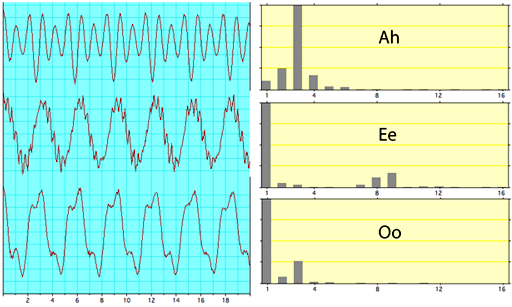
This is another example of vowel sounds produced at a frequency of 325 Hz by a female voice. It shows the display vs time on the left to show the waveforms, and the Fast Fourier Transform on the right to show the distinctive harmonic content of the vowels. There is considerable variation, but the ear acts as a harmonic analyzer and can easily distinguish and recognize these sounds.

这是另一个由女性声音在325 Hz频率下产生的元音声音的例子。左侧显示声音随时间的变化以展示波形,右侧显示快速傅里叶变换以展示元音的特征谐波内容。存在相当大的变化,但耳朵作为一种谐波分析器,能够轻松地区分和识别这些声音。
Index

Voice concepts

Musical instruments

Reference
Benade
Ch 19
索引 声学概念 音乐乐器 参考 Benade 第19章
 
HyperPhysics***** Sound
HyperPhysics ***** 声音
R Nave
Go Back
返回


Representative Vowel Formant Frequencies

代表性元音形式抗扰频率

Ladefoged lists representative vowel formant frequencies, averages from several U. S. speakers. The symbols used represent standard English phonemes.

Ladefoged 列出了代表性的元音共振频率,这些数据是基于几位美国说话人的平均值。所使用的符号代表标准的英语音位。
First three vowel formant frequencies
前三个元音共振频率
Vowel
元音
I
II
III
/i/
280 Hz
2250 Hz
2890 Hz
/I/
400 Hz
1920 Hz
2650 Hz
/a/
710 Hz
1100 Hz
2450 Hz

The formant frequencies are keys to the distinguishablility of the vowel sounds.

共振频率是区分元音声音的关键。
Sketches of vocal mechanism during vowel formation
元音形成时声机制示意图
How does the ear distinguish the vowel sounds?
耳朵如何区分元音声音?
Index

Voice concepts

Musical instruments

References
Benade
Ch 19

Ladefoged
索引 声学概念 音乐乐器 参考文献 Benade 第19章 Ladefoged
 
HyperPhysics***** Sound
HyperPhysics ***** 声音
R Nave
Go Back
返回