Nuclear Binding Energy核结合能
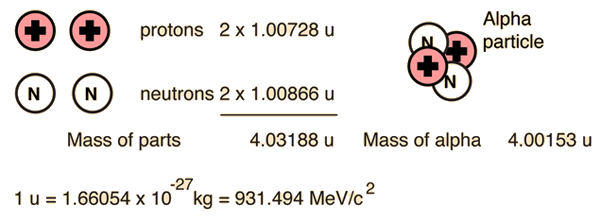
Nuclei are made up of protons and neutrons, but the mass of a nucleus is always less than the sum of the individual masses of the protons and neutrons which constitute it. The difference is a measure of the nuclear binding energy which holds the nucleus together. This binding energy can be calculated from the Einstein relationship: 原子核由质子和中子组成,但原子核的质量总是小于构成它的各个质子和中子的个体质量之和。这个差异是衡量将原子核结合在一起的核结合能的量度。这个结合能可以通过爱因斯坦关系计算:
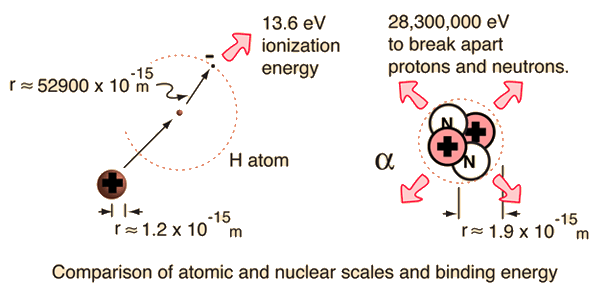
For the alpha particle Δm= 0.0304 u which gives a binding energy of 28.3 MeV. 对于α粒子,Δm= 0.0304 u,这给出了28.3 MeV的结合能。
![]() The enormity of the nuclear binding energy can perhaps be better appreciated by comparing it to the binding energy of an electron in an atom. The comparison of the alpha particle binding energy with the binding energy of the electron in a hydrogen atom is shown below. The nuclear binding energies are on the order of a million times greater than the electron binding energies of atoms. 核结合能的巨大性也许可以通过与原子中电子的结合能进行比较来更好地理解。下面展示了α粒子结合能与氢原子中电子结合能的比较。核结合能大约是原子中电子结合能的百万倍。
![]()
核结合能 = Δmc² |
Index Nuclear Structure Concepts 核素结构概念 | ||
|
Go Back
返回 |
Fission and fusion can yield energy裂变和聚变可以产生能量
![]()
|
Index Nuclear fission concepts Nuclear fusion concepts 索引 核裂变概念 核聚变概念 | ||||
|
Go Back
返回 |
Nuclear Binding Energy Curve核结合能曲线
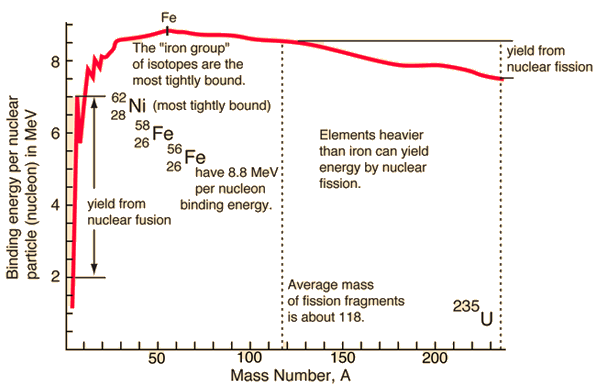
The binding energy curve is obtained by dividing the total nuclear binding energy by the number of nucleons. The fact that there is a peak in the binding energy curve in the region of stability near iron means that either the breakup of heavier nuclei (fission) or the combining of lighter nuclei (fusion) will yield nuclei which are more tightly bound (less mass per nucleon). 结合能曲线是通过将总核结合能除以核子数得到的。结合能曲线在铁附近稳定区域出现峰值,这意味着较重的核的分裂(裂变)或较轻的核的结合(聚变)将产生结合更紧密(每核子质量更小)的核。
The binding energies of nucleons are in the range of millions of electron volts compared to tens of eV for atomic electrons. Whereas an atomic transition might emit a photon in the range of a few electron volts, perhaps in the visible light region, nuclear transitions can emit gamma-rays with quantum energies in the MeV range. 核子的结合能范围在百万电子伏特,而原子电子的结合能则在十电子伏特量级。尽管原子跃迁可能发射几电子伏特的光子,可能处于可见光区域,核跃迁却能发射量子能量在兆电子伏特量级的伽马射线。
The iron limit铁的极限
在恒星的核融合过程中,较重元素的积累被限制在铁以下,因为铁的融合会消耗能量而不是提供能量。铁-56在恒星过程中很丰富,其每个核子的结合能为8.8 MeV,是第三种结合最紧密的同位素。其平均每个核子的结合能仅被58Fe和62Ni超过,其中镍的同位素是结合最紧密的同位素。 |
Index Nuclear fission concepts Nuclear fusion concepts 索引 核裂变概念 核聚变概念 | |||||
|
Go Back
返回 |
Fission and Fusion Yields裂变与聚变产物
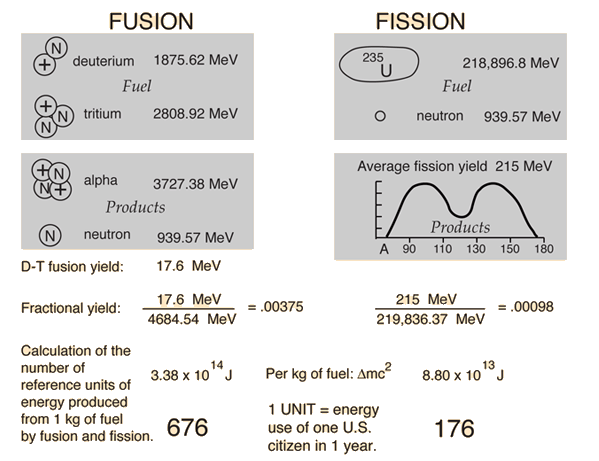
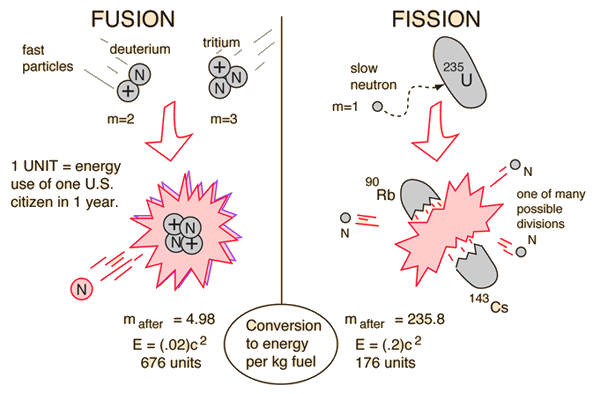
![]() Deuterium-tritium fusion and uranium-235 fission are compared in terms of energy yield. Both the single event energy and the energy per kilogram of fuel are compared. Then they are expressed in terms of a nominal per capita U.S. energy use: 5 x 10¹¹ joules. This figure is dated and probably high, but it gives a basis for comparison. The values above are the total energy yield, not the energy delivered to a consumer. 氘-氚聚变和铀-235裂变在能量产出方面进行比较。两者单次事件的能量以及每千克燃料的能量均被比较。然后它们以名义上的美国人均能源消耗(5×10¹¹焦耳)来表达。这个数字已过时且可能偏高,但为比较提供了基础。上述数值是总能量产出,而非交付给消费者的能量。
|
Index Nuclear fission concepts Nuclear fusion concepts 索引 核裂变概念 核聚变概念 | ||||
|
Go Back
返回 |
![]()
|
Index Nuclear fission concepts Nuclear fusion concepts 索引 核裂变概念 核聚变概念 | |||
|
Go Back
返回 |